Windsor Gardens Ideas for Shared Yards
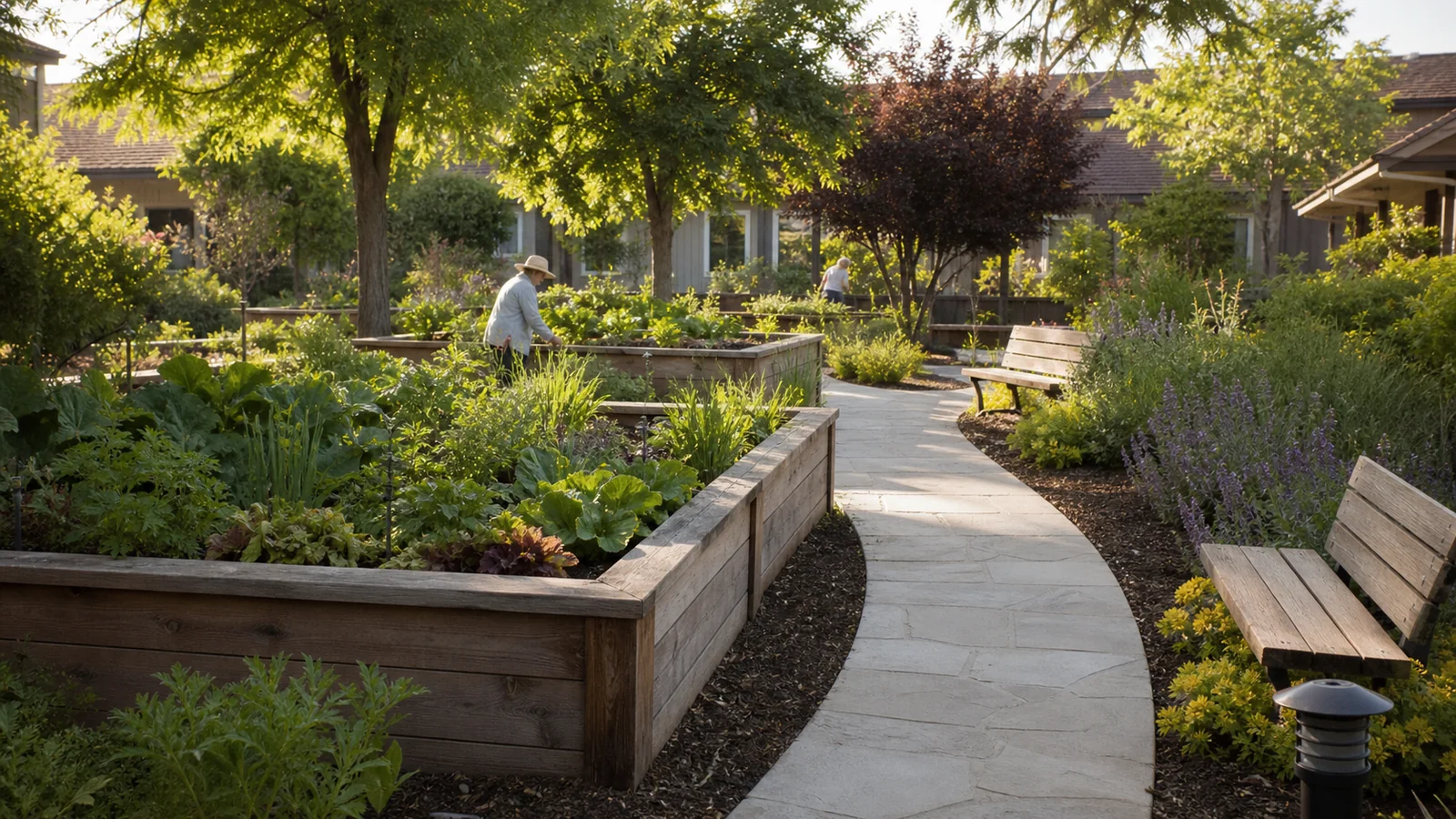
Use Windsor Gardens As A Shared-Space Design Cue
Windsor Gardens can mean different things in search, but the useful garden lesson comes from the Denver active adult community: mature landscaped acreage, shared outdoor amenities, walking routes, resident activity, and community garden plots. For homeowners, condo boards, small HOAs, and neighbors sharing a courtyard, that is a more useful angle than treating Windsor Gardens as a single place to copy.
A shared yard has to work harder than a private backyard. It needs beauty, clear rules, easy movement, places to pause, and maintenance that does not depend on one enthusiastic person doing everything. It also has to feel calm. A garden that serves many people can become cluttered quickly if every bench, pot, bed, sign, and path is added without a plan.
Use this guide if you want a mature residential landscape, shared courtyard, community garden, or HOA green space to feel more intentional without becoming formal or difficult to maintain.
Start With Rules, Ownership, And Maintenance
Shared gardens fail when the design is lovely but the ownership is vague. Before changing a common area, name who controls the space, who pays for improvements, who waters, who prunes, who approves changes, and who can remove something that no longer works.
This matters in condo communities, apartment courtyards, senior living landscapes, cul-de-sacs, and neighborhood garden beds. A planting bed beside a walkway may look like free space, but it may belong to an association, landlord, municipality, utility easement, or shared maintenance contract.
Before planting, check:
- Who owns the ground or planter area
- Whether digging, edging, trellises, or raised beds need approval
- Where underground utilities, irrigation, and drainage run
- Who is responsible for watering and seasonal cleanup
- Whether seating, lights, storage, compost, or signs are allowed
- How paths, snow removal, mowing, and emergency access are protected
- What happens if a plant blocks sightlines or becomes invasive
This sounds unromantic, but it protects the garden. Clear rules let the planting feel generous without creating conflict later. They also help residents understand which areas are public, semi-private, or personally maintained.
Our apartment patio ideas use the same principle at a smaller scale: rules and real footprints come before furniture, pots, and decorative upgrades.
Make Paths Do More Than Move People
A mature shared landscape needs paths that explain the space. Paths show where people should walk, where planting can be loose, where seating belongs, and which areas are meant to be enjoyed from a distance.
In a Windsor Gardens-style setting, the path is not only a line between buildings. It is the social and practical backbone of the garden. A good path lets people walk comfortably, carry tools, pause for conversation, and move past one another without stepping into planting beds.
Useful path choices include:
| Path need | Design move | Why it helps |
|---|---|---|
| Daily walking | Smooth, predictable surface | Reduces trip risk and feels easy to use |
| Garden access | Short side paths to beds | Keeps gardeners out of lawn and mulch |
| Seating areas | Wider pause points | Lets people stop without blocking movement |
| Shared courtyards | Clear loops instead of dead ends | Makes the space feel larger and more welcoming |
| Mature trees | Gentle curves around roots | Protects tree health and keeps the path natural |
| Low-light areas | Subtle, shielded lighting | Improves comfort without glare |
Avoid scattering stepping stones where people need reliable access. They can work in a private side garden, but common areas usually need firmer, more legible routes. If a route is used by older adults, guests, gardeners carrying tools, or anyone with limited mobility, choose stability over charm.
The simplest path improvement may be an edge. A crisp boundary between path and planting can make a loose garden look cared for, even when the plantings are full and seasonal.
Build Raised Beds Around Real Use
Windsor Gardens’ community garden page describes raised planting bed boxes with water access. That is the right lesson to borrow. Raised beds work best when they are designed around gardeners, water, tools, and repeat maintenance, not only around a pretty overhead layout.
For shared gardens, raised beds should answer practical questions first:
- Can gardeners reach the center without stepping into the soil?
- Is there enough room between beds for carts, walkers, kneeling pads, or two people passing?
- Is water close enough that hoses will not cross main paths?
- Is the soil depth right for vegetables, herbs, annuals, or shallow-rooted flowers?
- Is there one place for tools, gloves, labels, and shared supplies?
- Can the beds be assigned, rotated, or rested without confusion?
- Is the edge comfortable to lean against or sit near?
Raised beds are especially useful in older residential landscapes where soil may be compacted, roots are heavy, or gardeners need a clearer working height. They also make shared ownership easier. A bed has a boundary. A boundary makes it easier to assign care, track weeds, avoid accidental harvesting, and keep enthusiastic planting from spreading everywhere.
For a small home version, use one or two raised beds near a path, hose, or sunny patio edge. For a community version, leave more circulation than you think you need. The space between beds is part of the garden, not wasted square footage.
Keep Mature Landscapes Calm
Older communities often have something newer gardens lack: mature trees, settled lawns, broad shrub masses, and established views. The temptation is to add more color everywhere. That can make a shared space feel busy rather than cared for.
Start by protecting the structure that already works. Mature trees give shade, scale, habitat, and a sense of arrival. Existing hedges may guide views. Lawn may still be useful for openness, gatherings, or visual rest. The goal is not to fill every quiet patch.
Use this calm layering approach:
- Keep the best mature trees and work around their roots.
- Repeat a small set of shrubs instead of adding one of everything.
- Use groundcovers or mulch under trees where turf struggles.
- Put seasonal color in planned pockets, not along every edge.
- Choose one edging material for nearby beds.
- Remove tired shrubs before adding more decoration.
- Keep sightlines open near doors, corners, and crossings.
In a shared landscape, restraint is a kindness. It makes the garden easier to understand and easier to maintain. It also leaves room for people. A bench under a tree, a clean path, and a repeated planting edge can feel more generous than a crowded border that no one can comfortably enter.
Our garden drawing guide can help you map what is already carrying the space before you decide what to add.
Use Water-Wise Planting Without Making It Sparse
Many Windsor Gardens searches point to Denver, and Denver landscapes have to respect dry conditions, hot sun, wind, and water limits. Even outside Colorado, the principle holds: shared landscapes should use water where it matters and avoid designs that need constant rescue.
Water-wise design does not mean a bare gravel yard with a few lonely plants. It means grouping plants by water need, improving soil where appropriate, mulching open ground, choosing climate-suitable plants, and keeping thirsty display areas close to water.
Use three planting zones:
| Zone | Where it belongs | Planting direction |
|---|---|---|
| Low-water backbone | Sunny open beds, slopes, street edges | Grasses, tough shrubs, drought-tolerant perennials |
| Moderate-water gathering area | Near benches, entries, patios, or garden beds | Flowering perennials, herbs, containers, seasonal color |
| Moisture-supported garden beds | Food gardens or high-value display beds | Raised beds, drip irrigation, compost-rich soil |
This keeps the landscape honest. The most visible and social areas can receive more care, while broad background areas stay resilient. It also makes maintenance conversations easier because the plan explains why some beds are watered more often than others.
Mulch is important, but use it with care. Too much loose mulch on slopes or near paths can migrate. Too little mulch leaves soil exposed and weedy. In shared gardens, choose materials that are easy to refresh and do not create tracking, dust, or trip problems.
For soil decisions before planting, our soil amendments guide can help separate compost, mulch, drainage work, and soil testing.
Add Seating Where People Already Pause
A shared garden needs seating, but not every seat earns its place. Benches and chairs should support real behavior: waiting for a neighbor, resting after a walk, reading in shade, watching a garden bed, or meeting someone without blocking a path.
Before adding seating, watch where people already slow down. Good locations often appear naturally:
- Near a path intersection
- Under open shade
- Facing a flower bed, lawn, or distant view
- Beside community garden plots
- Near an entrance, but not directly in traffic
- Along a walking loop at comfortable intervals
- In a spot that feels visible but not exposed
Avoid placing a bench where it stares into a wall, trash area, parked cars, or someone’s window. A seat needs a reason to be used. It also needs a firm surface underfoot, enough space for someone to approach it, and enough clearance that the path still works.
Furniture style should be quiet. In mature shared landscapes, heavy visual themes can date quickly. Simple wood, metal, or powder-coated benches usually age better than novelty seating or bright plastic pieces. Add softness through planting, not through furniture that needs constant cleaning.
Design Community Garden Areas Like Outdoor Rooms
A community garden is not only a row of beds. It is an outdoor room with circulation, storage, water, social edges, sun, shade, and rules. The more people who use it, the more the room needs a clear layout.
A useful shared garden room includes:
- A clear entrance
- Numbered or named beds
- A central path wide enough for tools
- Water points that do not create hose tangles
- A small shared notice area
- Compost or waste rules, if composting is allowed
- A place for tools that does not look abandoned
- A shaded pause spot where gardeners can talk
- Planting edges that separate garden activity from nearby lawns or walks
Signage should be brief and useful. A small sign that explains plot numbers, water rules, or seasonal cleanup dates is helpful. A wall of instructions can make the garden feel controlled rather than welcoming.
If garden beds are assigned to individuals, keep the public-facing edges tidy. The inside of a plot can be personal and productive, but the shared paths and borders should feel consistent. That balance lets different gardeners express themselves without making the whole area feel chaotic.
Make Seasonal Care Predictable
Shared landscapes need rhythm. Without a seasonal rhythm, small tasks become arguments: who deadheads, who cuts back grasses, who removes dead annuals, who refreshes mulch, who stores hoses, who cleans seating, and when a bed gets replanted.
Keep the maintenance plan simple enough for real people to follow.
Use a seasonal checklist:
| Season | Shared-space priority |
|---|---|
| Early spring | Inspect paths, prune damaged branches, clean beds, review water access |
| Late spring | Plant annuals or vegetables, refresh mulch, label beds, check seating |
| Summer | Water deeply, weed visible edges, keep paths open, remove hazards |
| Early fall | Harvest, edit tired plants, divide crowded perennials, plan replacements |
| Late fall | Store hoses, clear slippery leaves from paths, leave useful seedheads |
| Winter | Review what worked, approve larger changes, protect access routes |
Do not make every bed high maintenance. A shared landscape should include some areas that can look good with basic seasonal care. Use demanding plants only where someone has clearly agreed to care for them.
It also helps to keep a simple garden record. Note what was planted, what failed, what spread too much, what needed extra water, and what residents liked. Future gardeners will thank you, and the landscape will become steadier each year.
Bring Windsor Gardens Thinking Home
The best Windsor Gardens lesson is not a specific plant list. It is the way a mature shared landscape can combine rules, paths, community beds, seating, water, and care into something that feels lived in.
Start with one improvement that clarifies the space.
Try:
- Map the ownership and approval process.
- Identify the path or edge that causes the most confusion.
- Choose one social pause point for a bench or better planting.
- Convert one hard-to-maintain bed into a simpler water-wise layer.
- Add one raised bed area only if water, access, and care are clear.
- Repeat a small plant palette instead of adding scattered color.
- Create a seasonal care rhythm before expanding.
That is how a shared yard becomes more than leftover land between buildings. It becomes a garden people can understand, use, and care for together.
You might also like
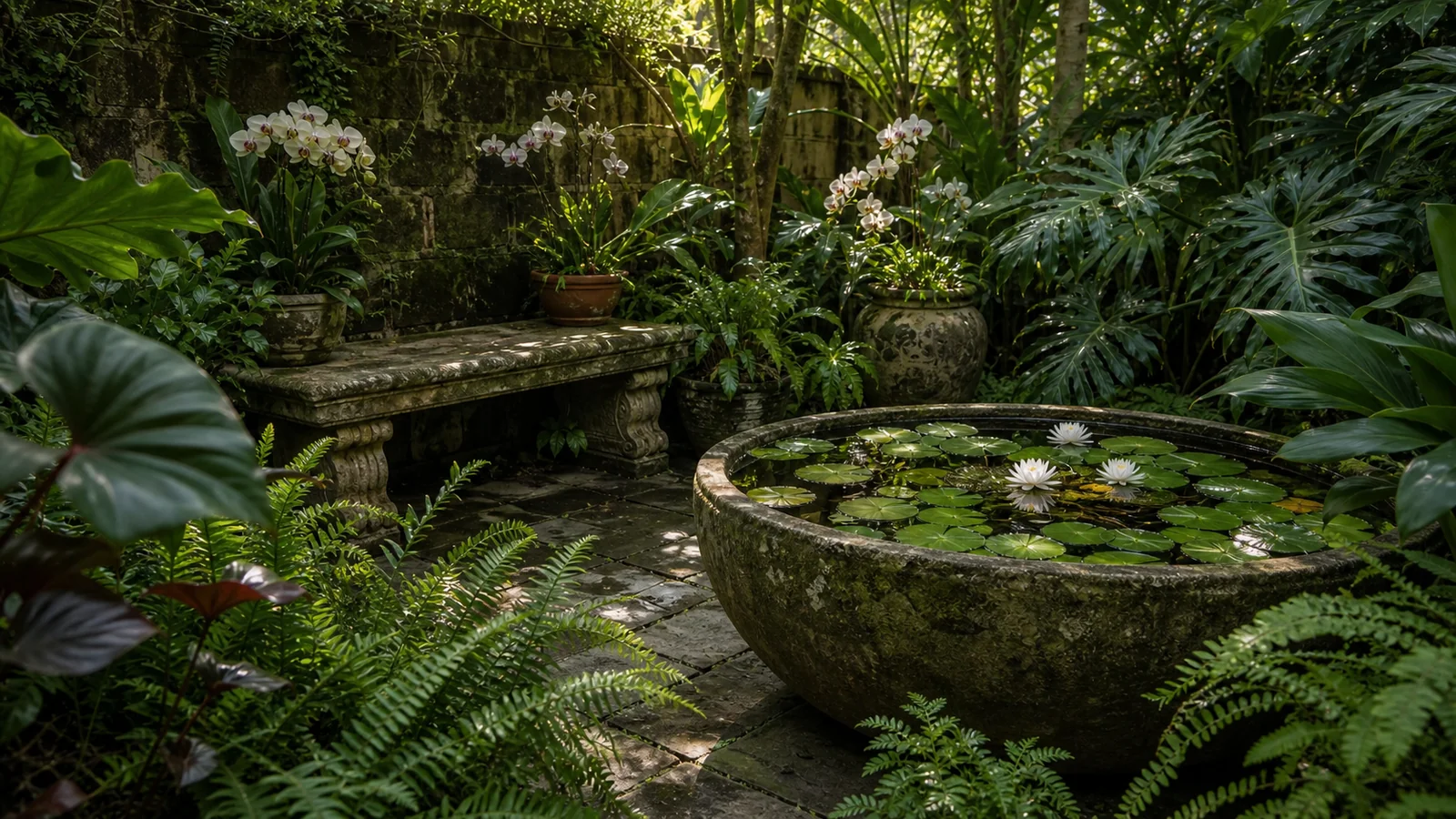
McKee Jungle Gardens Ideas for Tropical Yards
Borrow McKee Jungle Gardens ideas for shaded tropical layers, water bowls, slow paths, old-stone texture, and courtyard scale.
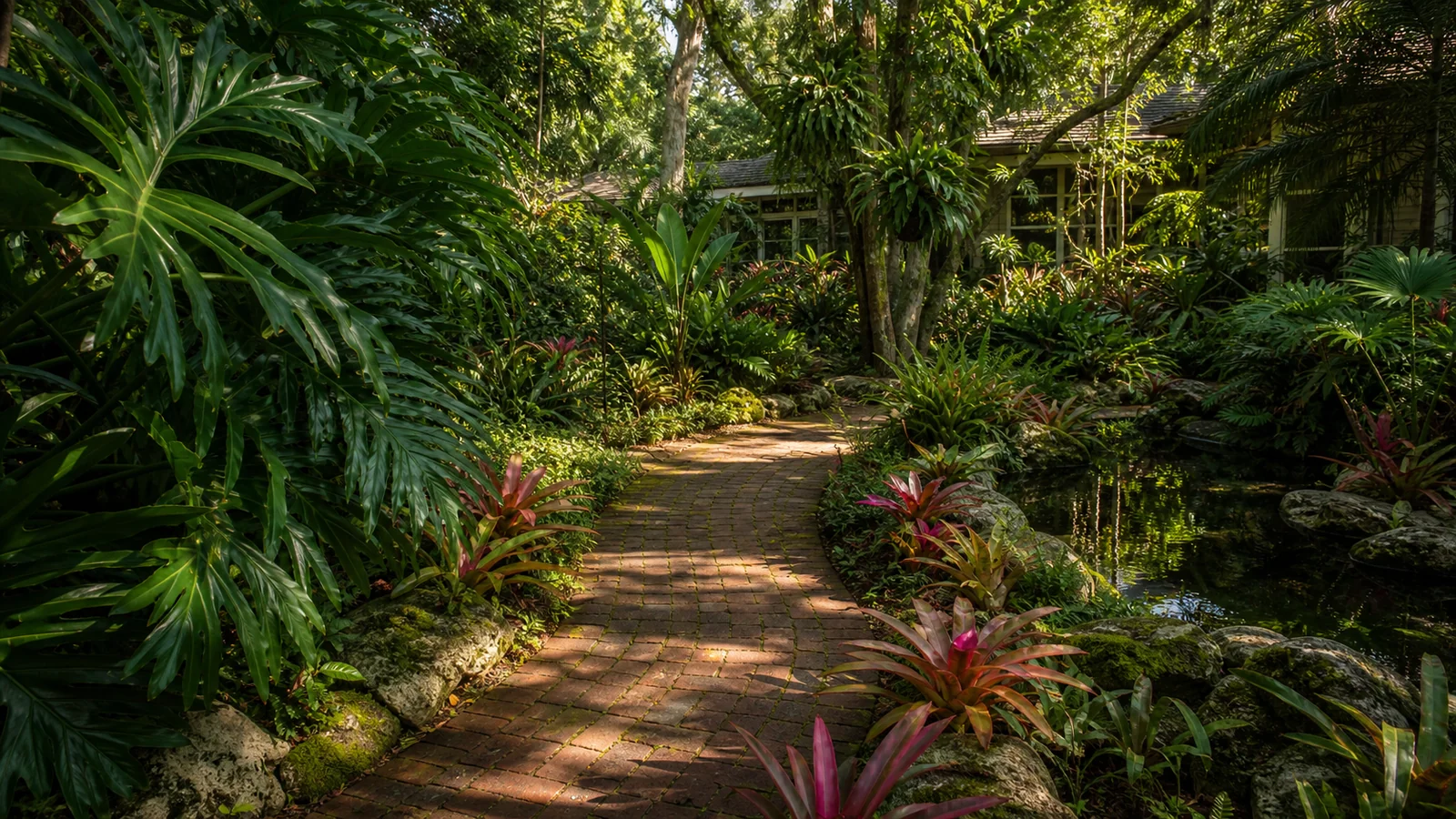
Wonder Gardens Ideas for Tropical Home Yards
Borrow Wonder Gardens ideas for banyan shade, winding paths, water, orchids, wildlife edges, and a lush but manageable yard.
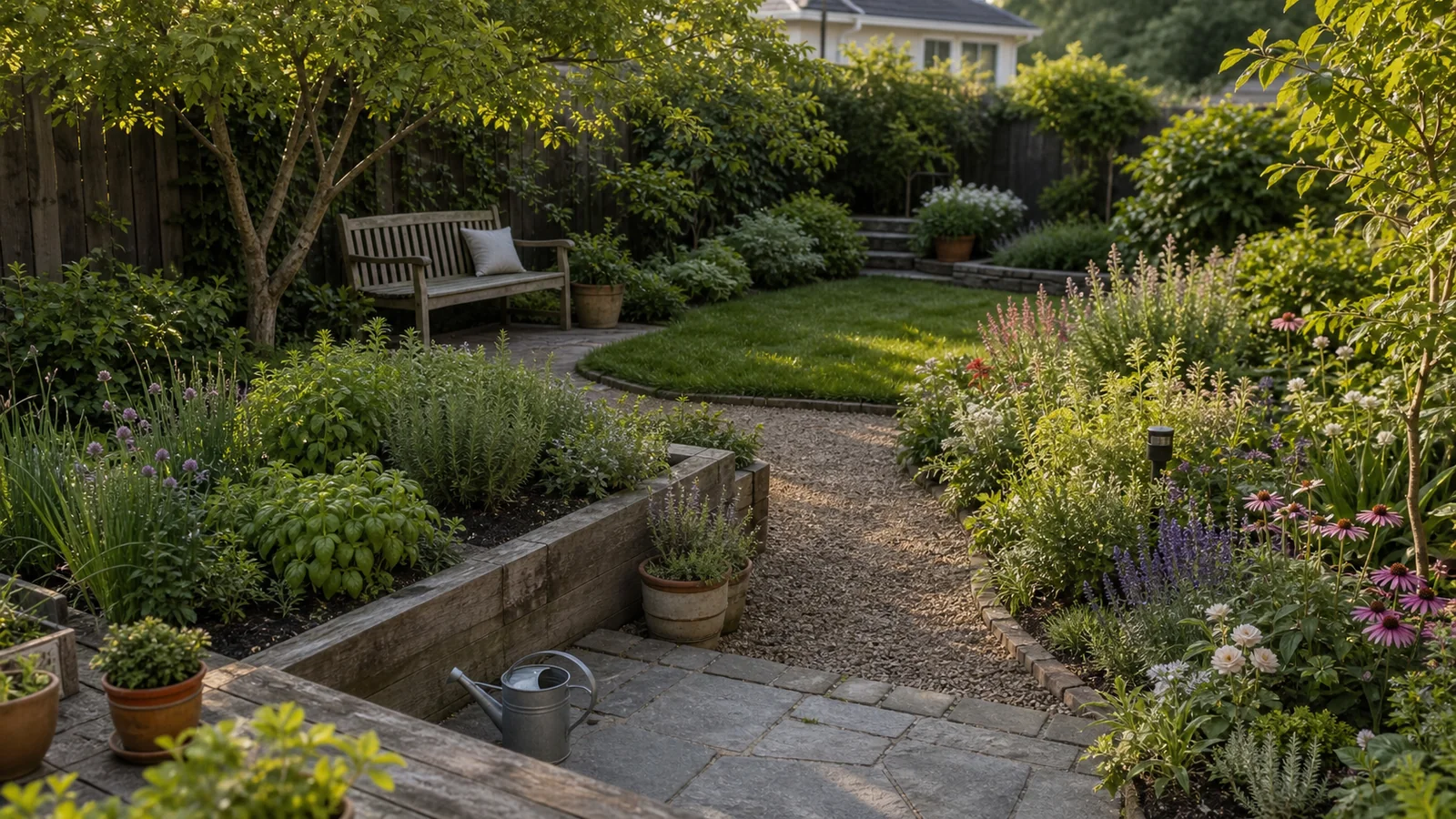
The Gardens: Make a Yard Feel Intentional
Use the gardens idea to turn scattered beds, paths, seating, and planting into a yard that feels calm, usable, and connected.