The Gardens: Make a Yard Feel Intentional
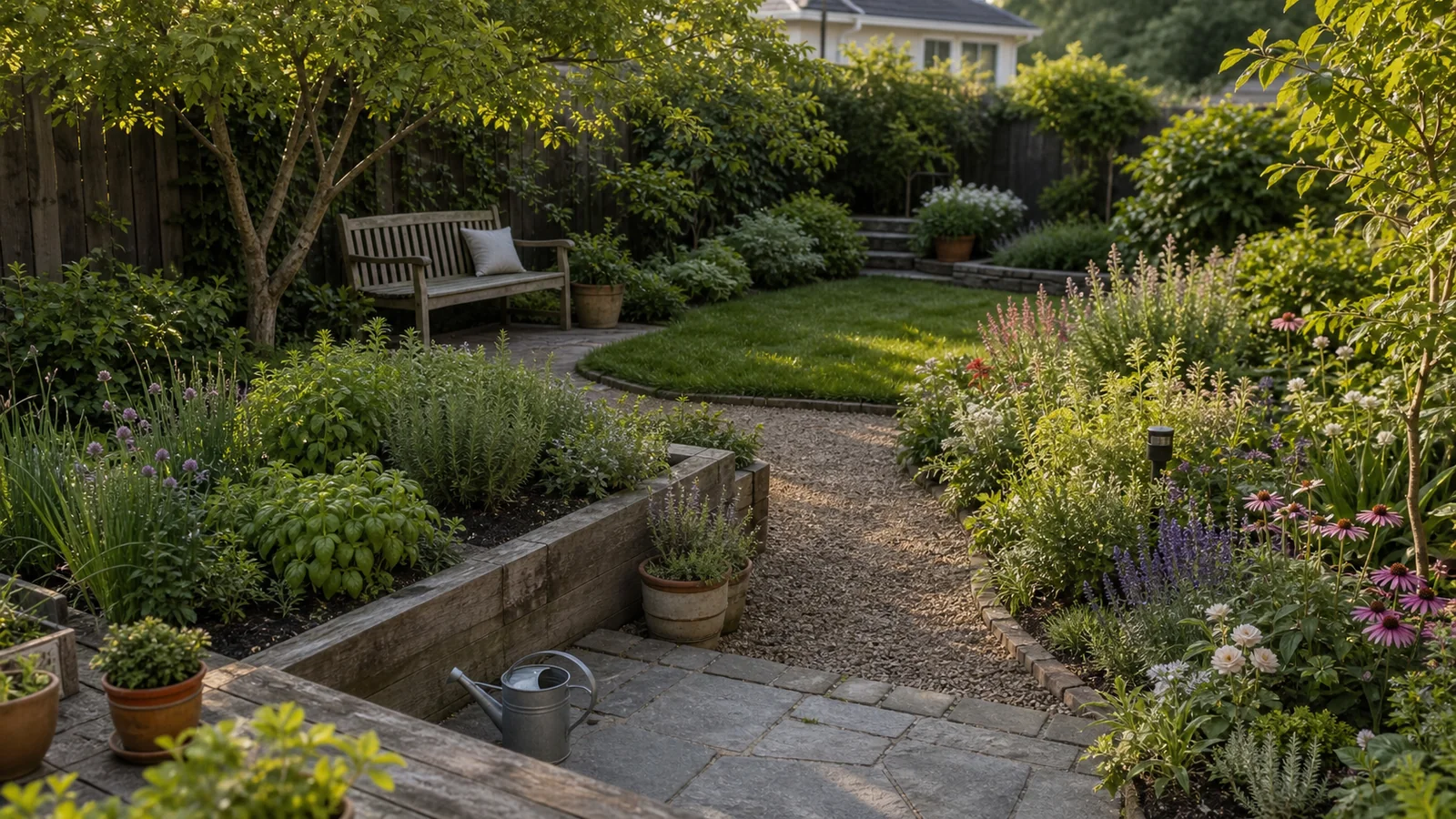
Think Of The Gardens As A Connected System
When people search for “the gardens,” they may be thinking of a public garden, a community landscape, an apartment courtyard, or simply the idea of a beautiful outdoor place. For a homeowner, the useful question is this: what makes a yard feel like gardens instead of leftover space around the house?
The answer is rarely one perfect plant. It is usually connection. Paths connect the door to the patio. Planting connects the fence to the lawn. Seating gives the garden a reason to be used. Edges make beds look intentional. Repetition makes several small areas feel related.
Use the gardens idea when your yard has good parts but no clear whole. You may already have a patio, a few beds, containers, and a patch of lawn. This guide helps those pieces read as one calm outdoor layout.
Name The Different Garden Jobs
A yard becomes easier to design when each area has a job. Public gardens often do this naturally: there may be an entry garden, a shade walk, a lawn, a rose bed, a children’s space, a water-wise area, or a quiet bench. A home yard can use the same thinking at a smaller scale.
Walk outside and name each existing area by what it should do. Do not start with plant names. Start with use.
Common home-garden jobs include:
- Welcome people at the front door
- Screen a neighbor view
- Make the patio feel softer
- Create shade for sitting
- Grow herbs or seasonal flowers
- Give children or pets open space
- Slow water on a slope
- Make a fence line look finished
- Improve the view from inside the house
Once each area has a job, you can make better choices. A screening bed needs height and density. A patio bed needs texture, scent, and easy cleanup. A front entry needs structure more than a huge plant collection.
If the jobs feel unclear, draw the yard from above and label what each area should do. Our gardening draw guide is useful for mapping those decisions before you move soil or buy plants.
Connect Garden Rooms With Simple Paths
Garden rooms do not need walls. They can be made by paths, planting height, paving changes, shade, furniture, or a shift in mood. The key is that one area leads to another without confusion.
Start with the route you already walk. From the back door, where do you go first? The trash bins, the grill, the hose, the shed, the seating area, the side gate, or the vegetable bed? The honest walking pattern is usually the best place to design.
Make the main route clear with one repeated material. It might be gravel, stepping stones, brick, mulch, or simple concrete pavers. Then let secondary paths feel quieter.
| Route type | Home version | Best use |
|---|---|---|
| Main path | Wide enough for tools and daily movement | Door to patio, gate, shed, or lawn |
| Garden path | Narrower and more intimate | Through planting or around beds |
| Service path | Practical and durable | Compost, bins, hose, or storage |
| Visual path | A line of pots, lights, or edging | Guides the eye when walking is not needed |
Do not add a path just for decoration. If it does not lead to a useful place, it can make the yard feel busy.
Use Repetition To Make Separate Areas Belong Together
The easiest way to make scattered gardens feel connected is repetition. Repeat a plant, a pot material, a flower color, a paving texture, or a shape. Repetition tells the eye that the yard was designed on purpose.
This does not mean every bed should match. In fact, exact matching can feel stiff. Use enough repetition to create rhythm, then let each area have its own role.
Good repetitions include:
- The same edging along several beds
- Three groups of the same ornamental grass
- Matching containers near the door and patio
- One flower color repeated from front to back
- The same gravel in a path and seating pad
- One evergreen shape used at key corners
- Warm lighting repeated at entry, path, and seat
If your yard feels chaotic, look for too many one-off choices. One random blue pot, one red chair, one bright annual mix, one different mulch, and one unrelated border can all be attractive alone but noisy together.
Choose two or three repeat elements and let them do more work.
Balance Planting With Usable Open Space
Many people try to solve every garden problem with more plants. Plants matter, but gardens also need space for movement, maintenance, light, and rest. A yard with no open breathing room can feel smaller than it is.
Look for the right balance between planted and open areas. A compact patio may need containers and a narrow border, not deep beds on every side. A wide lawn may need stronger edges and one seating destination, not a dozen small island beds.
Use open space intentionally:
- Lawn can be a visual pause or play area.
- Gravel can become a flexible seating or potting zone.
- Paving can support dining, grilling, and furniture.
- Mulch can create a quiet service route.
- Bare wall or fence space can make climbing plants stand out.
Public gardens often use open space to make special plants feel more important. Home gardens can do the same. A clear patch of paving beside a beautiful container can look calmer than five extra pots crowded around it.
Plan For Views From Inside The House
The gardens you notice most may be the ones you see through windows. A backyard can look fine when you stand in it but disappointing from the kitchen, sofa, desk, or bedroom. Design from those views as well as from the ground.
Stand inside and look out. What do you see first? Fence, bins, blank lawn, air conditioner, patio clutter, or a beautiful bed edge? Then decide what should become the view.
Useful window-view upgrades include:
- A small tree placed off-center
- A birdbath or pot at the end of a sight line
- Evergreen shrubs to hold winter structure
- A cleaner edge between lawn and planting
- A bench that gives the view a human purpose
- A simple trellis to screen a dull fence section
- Seasonal containers where they can be seen daily
This is where the gardens idea becomes personal. The best view is not always the most expensive one. It is the view that makes you feel connected to the yard during ordinary routines.
Make Care Part Of The Design
Beautiful gardens are not just planted; they are maintainable. Before adding a new bed or feature, ask how you will reach it, water it, prune it, and clean it.
A garden that is hard to care for usually stops looking designed. Weeds take over deep borders. Pots dry out. Paths blur into mulch. Furniture migrates into the easiest walking route. The solution is not perfection. It is designing care into the layout.
Check these practical details:
| Maintenance need | Design choice that helps |
|---|---|
| Watering containers | Keep them near a hose route or rain barrel |
| Weeding beds | Keep bed depth within reach or add stepping access |
| Pruning shrubs | Leave space behind mature plants |
| Cleaning paths | Use edging to keep soil and gravel separate |
| Storing tools | Add a hidden but reachable storage spot |
| Seasonal refresh | Use containers where annuals are easiest to replace |
If care is already a pain point, start by reducing friction. Move thirsty pots closer to water. Widen the path you actually use. Replace fussy plants in hard-to-reach areas with tougher structure.
Choose A Mood For Each Area
Several gardens can live in one yard if their moods make sense. The entry might be tidy and evergreen. The patio might be relaxed and fragrant. The side yard might be practical and edible. The back fence might be loose and pollinator-friendly.
The trick is to avoid making every area compete for attention.
Try assigning one mood to each zone:
| Garden area | Possible mood | Design cues |
|---|---|---|
| Front entry | Calm and ordered | Evergreens, crisp edge, matched pots |
| Patio | Social and comfortable | Seating, herbs, shade, warm light |
| Side yard | Useful and efficient | Storage, path, bins, narrow planting |
| Back fence | Soft and natural | Shrubs, grasses, pollinator flowers |
| Shade corner | Cool and quiet | Ferns, hostas, bench, pale blooms |
For shade-heavy areas, our hostas for shade gardens guide shows how leaf size, texture, and spacing can create a lush mood without depending on constant flowers.
Edit Until The Whole Yard Reads Clearly
Once you have named the jobs, connected the routes, repeated a few materials, and chosen moods, edit. Editing is what turns many small garden ideas into the gardens.
Look for anything that interrupts the whole:
- A bed with no edge
- A path that stops nowhere
- A seating area with no shade or view
- A container group with too many styles
- A shrub that blocks the route
- A lawn shape that is hard to mow
- A fence line with random gaps and no rhythm
Then fix the most visible problem first. You do not need a full redesign to make the yard feel more intentional. A clean edge, repeated pots, a clearer path, and one better focal point can change how the whole space reads.
If your garden style leans loose and abundant, our chaos gardening without a mess article can help you keep that relaxed feeling without losing structure.
Start With One Connected Corner
Do not try to remake every garden area in one weekend. Choose one corner where two or three parts already meet: patio and lawn, path and gate, porch and front bed, or shed and side yard.
A good first project looks like this:
- Define what the corner should do.
- Clear out unused pots, broken edging, and clutter.
- Choose one repeated material from elsewhere in the yard.
- Add or clean the path to the corner.
- Strengthen one focal point.
- Plant for the actual light and water conditions.
- Leave enough open space to move and maintain.
That is how the gardens begin to feel connected. One clear corner gives you a pattern to repeat elsewhere, and the yard slowly becomes a set of outdoor rooms rather than a collection of unrelated projects.
You might also like
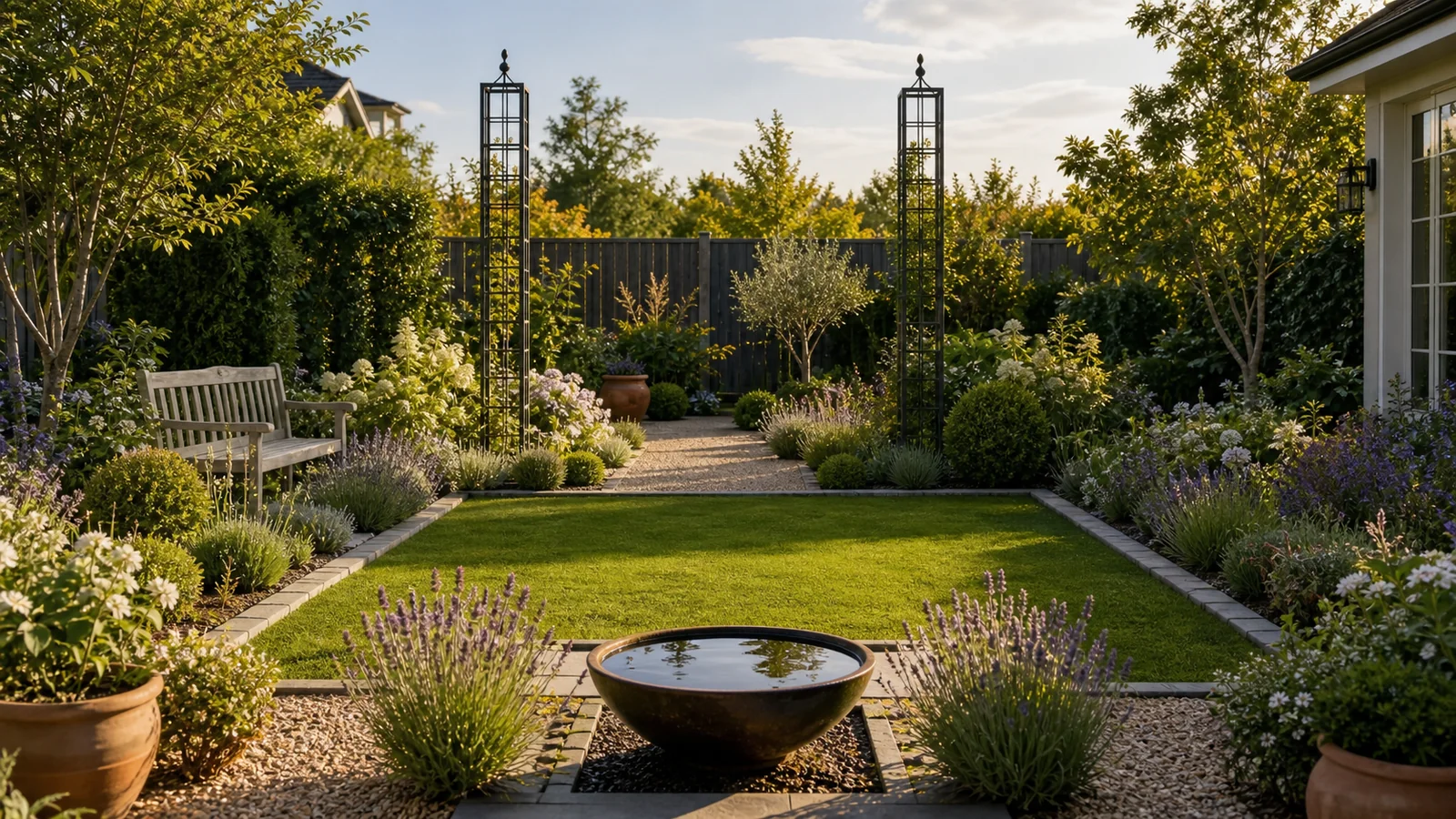
Coxhall Gardens Design Lessons For Home
Use Coxhall Gardens as a model for formal lawns, framed walks, children's corners, water views, and calm backyard structure.
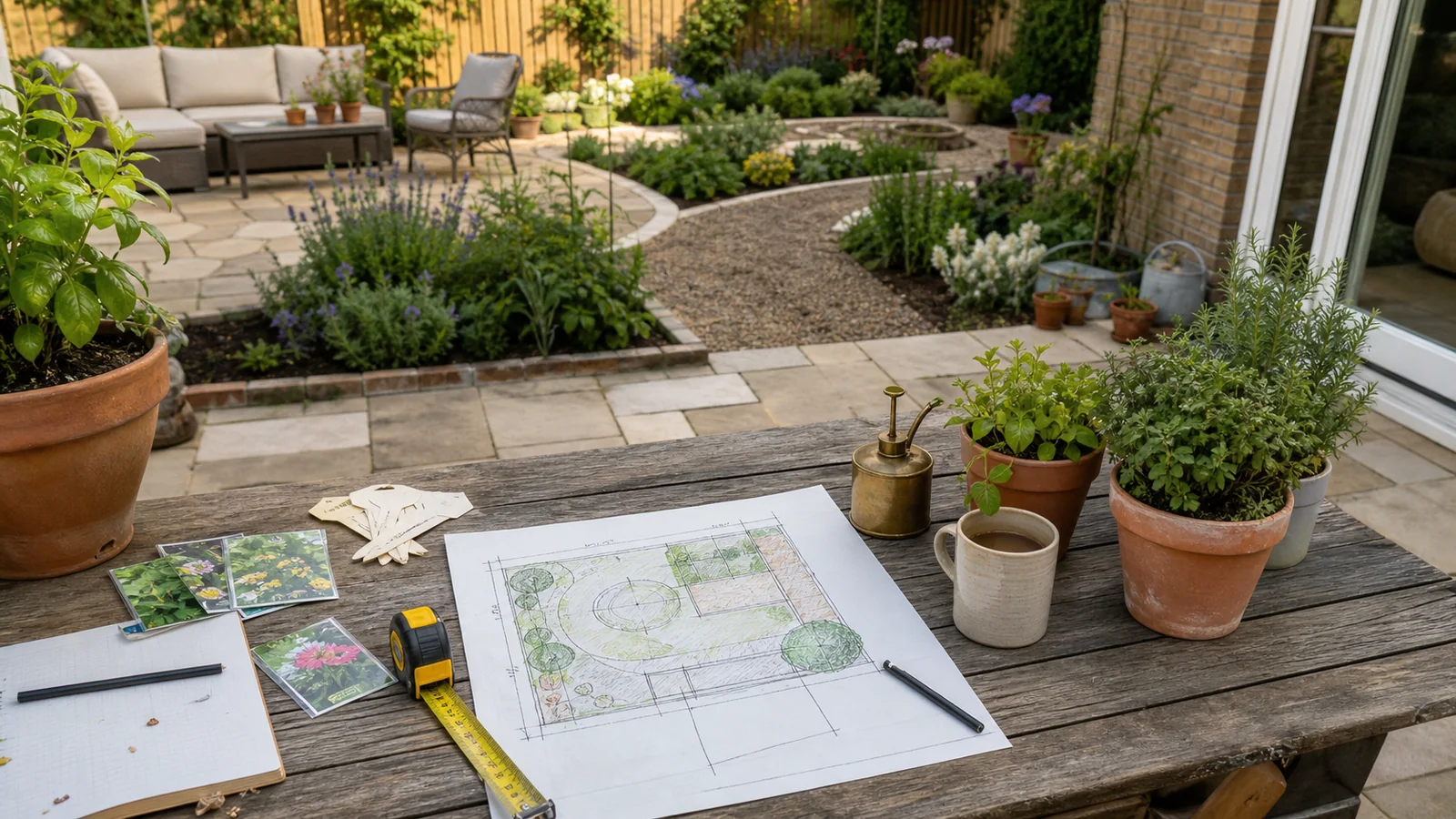
Dream Home Gardening Guide for Real Yards
Plan dream home gardening around daily views, outdoor rooms, planting layers, and maintenance you can keep up with.
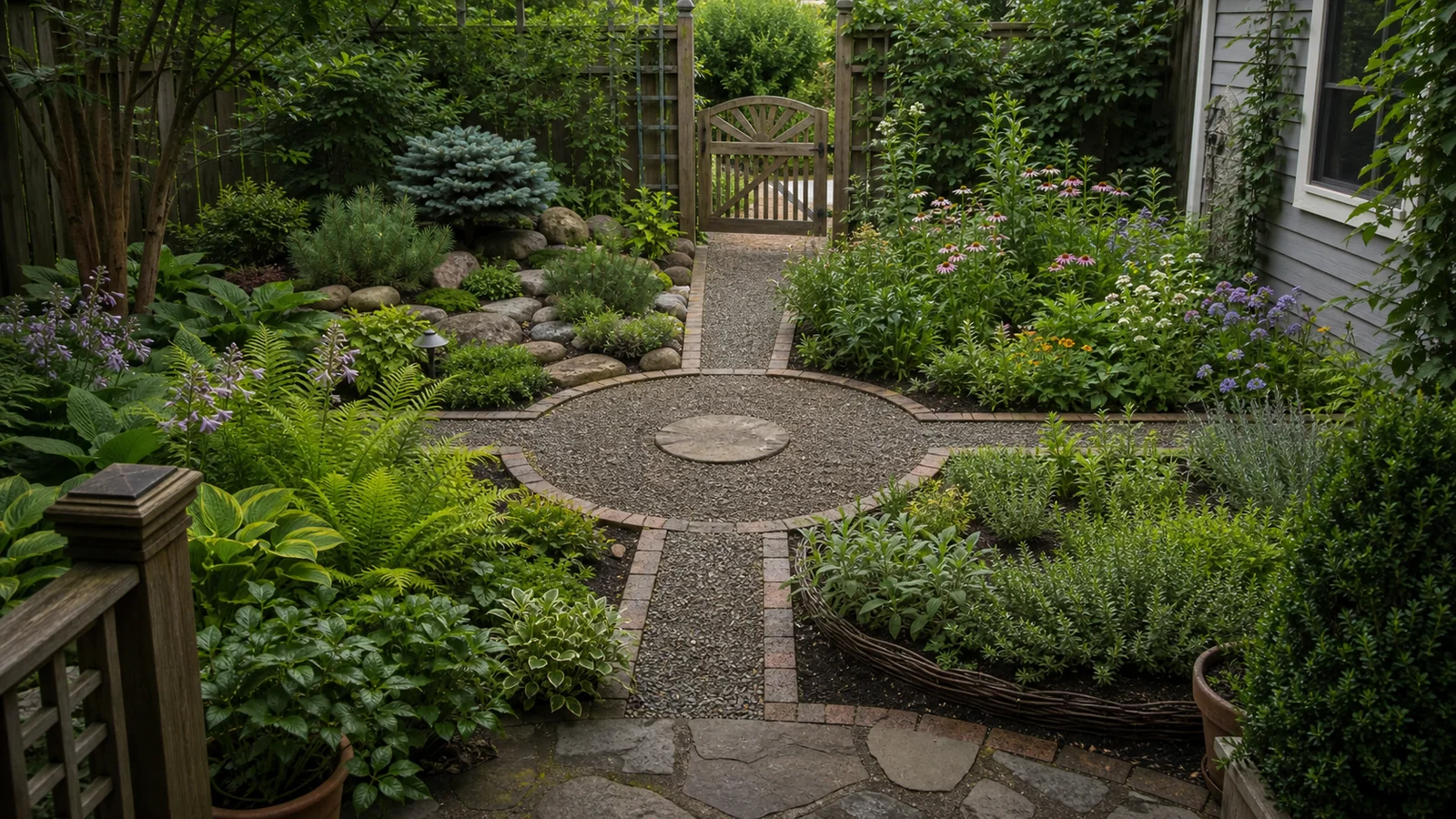
Inniswood Metro Gardens Design Ideas for Home
Use Inniswood Metro Gardens ideas to divide a small yard into shade, herbs, flowers, paths, and quiet garden rooms.