Soil Amendments for Gardens That Work
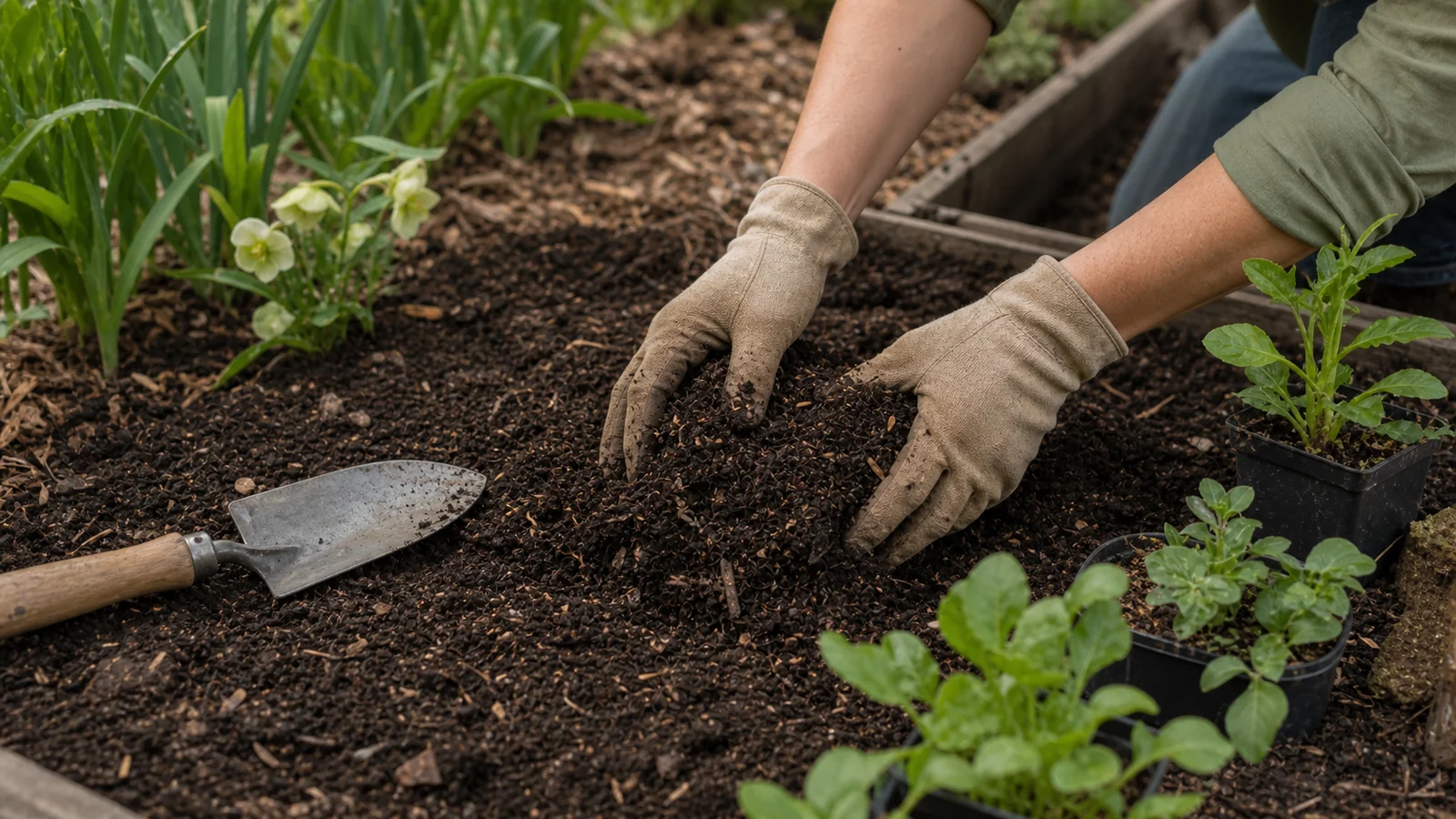
Fix The Soil Problem You Actually Have
Soil amendments for gardens can make plants stronger, but only when they solve the right problem. Compost, leaf mold, manure, lime, sulfur, bark, coir, and mineral products all have different jobs. Adding random bags to a bed can waste money, change pH in the wrong direction, or create nutrient overload.
Start with a calmer idea: amend soil with a purpose. Are you trying to improve drainage, hold more moisture, raise organic matter, correct pH, reduce compaction, or prepare a new bed? Each goal needs a different choice.
Good soil work is not glamorous, but it changes how the whole garden behaves. Plants establish more evenly, water moves better, roots spread more easily, and beds become easier to maintain.
Test Before You Correct Nutrients Or pH
A soil test is the best first step when you are changing pH or adding fertility. It can show pH, phosphorus, potassium, organic matter, and other nutrient patterns, depending on the lab. That matters because some garden soils already have plenty of certain nutrients.
Without a test, gardeners often add compost, manure, lime, or fertilizer because the bed “looks tired.” Sometimes that helps. Sometimes the real issue is poor drainage, shallow watering, shade, root competition, or plants that do not suit the site.
Test before you:
- Add lime to raise pH
- Add sulfur to lower pH
- Add strong fertilizers
- Use manure regularly
- Build a vegetable bed in unknown soil
- Try to solve repeated poor growth
- Plant expensive shrubs, trees, or long-term borders
For new beds, a test gives you a baseline. For established gardens, testing every few years is often enough unless a problem appears. Keep the report with your garden notes so you can see whether the soil is improving or drifting.
Know The Difference Between Amendments And Mulch
Amendments are mixed into soil to change its physical or chemical properties. Mulch sits on top of the soil to protect the surface, reduce weeds, moderate temperature, and conserve moisture. Both are useful, but they are not the same job.
Compost can be used as an amendment when mixed into a bed. It can also be used as a light topdressing in established plantings. Bark mulch usually belongs on the surface, not mixed deeply into a planting bed, because woody material can affect nitrogen availability as it breaks down.
Use this guide:
| Material | Usually best as | Main job |
|---|---|---|
| Finished compost | Amendment or light topdressing | Organic matter, structure, slow nutrients |
| Leaf mold | Amendment or mulch | Moisture holding and soil life |
| Bark mulch | Surface mulch | Weed reduction and soil protection |
| Composted manure | Amendment | Organic matter and nutrients |
| Lime | Amendment based on test | Raises pH in acidic soil |
| Sulfur | Amendment based on test | Lowers pH in alkaline soil |
| Perlite or vermiculite | Potting mix ingredient | Air or moisture balance in containers |
If you are improving a new bed, mixing compost into the top few inches can help. If you are maintaining an established shrub border, topdressing and mulching may disturb roots less.
Use Compost As The Reliable Starting Point
Finished compost is the most useful general amendment for many flower, vegetable, and mixed garden beds. It adds organic matter, improves soil structure, helps sandy soil hold moisture, and helps clay soil become easier to work over time.
Finished matters. Compost should smell earthy, not sour or rotten. It should not contain obvious food scraps, heat, or large undecomposed pieces. Poor-quality compost can introduce weed seeds, salts, trash, or uneven nutrients.
For annual flower and vegetable beds, a modest yearly layer of compost can help maintain productivity. For permanent shrub and perennial beds, use a lighter hand and avoid digging around established roots. Topdress with compost and protect the surface with mulch where appropriate.
More is not always better. Too much compost or manure can raise nutrient levels beyond what plants need. This is especially important in vegetable beds and areas where runoff matters. Let the soil test guide you.
Match Amendments To Clay Soil
Clay soil has tiny particles that hold water and nutrients, but it can become compacted, sticky, and slow to drain. The solution is usually organic matter, patience, and less foot traffic. It is rarely a quick sand fix.
Adding sand to clay can create a dense, concrete-like texture if the proportions are wrong. For most home gardens, compost, leaf mold, fine pine bark, cover crops, and surface mulch are safer choices.
For a new clay bed:
- Remove weeds and debris.
- Avoid working the soil when it is wet and sticky.
- Add finished compost or leaf mold.
- Mix gently into the top layer where annuals or perennials will root.
- Shape the bed so water does not sit around crowns.
- Mulch the surface after planting.
- Keep feet and wheelbarrows off the bed.
If the clay stays wet for long periods, choose plants that tolerate those conditions or improve drainage before planting. Soil amendments cannot fix a bed that is really a drainage problem.
Help Sandy Soil Hold Water
Sandy soil drains quickly and warms fast, but it does not hold moisture or nutrients well. Plants may wilt even when you watered recently because water moved through the root zone too quickly.
Organic matter is again the main helper. Compost, leaf mold, and other well-decomposed materials improve water and nutrient holding capacity. Mulch also matters because sandy soil can dry hard at the surface.
For sandy beds, amend the root zone rather than just the planting hole. A rich pocket in poor surrounding soil can encourage roots to stay in the pocket instead of spreading. It can also create uneven water movement.
Watering style matters too. Sandy soil often benefits from slower, more frequent checks during establishment. Drip irrigation or soaker hoses can help deliver water where roots need it.
If you are shopping for plants for hot or dry conditions, our North Haven Gardens ideas article explains why climate fit should come before flower color.
Loosen Compacted Soil Carefully
Compaction is common near new construction, patios, paths, play areas, and places where people cut across beds. Compacted soil has fewer air spaces, so roots struggle and water may run off or puddle.
First, stop the cause. Redirect foot traffic, add stepping stones, define paths, or keep equipment out of planting areas. Then improve the soil.
For lightly compacted beds, compost and mulch can help over time. For severe compaction, you may need deeper loosening before planting, especially for new beds. Work when soil moisture is moderate. Soil that is too wet smears; soil that is too dry can be hard to break.
Avoid repeatedly tilling established beds. Tilling can damage soil structure, disturb roots, and bring weed seeds to the surface. Once a bed is built, maintain it with topdressing, mulch, roots, and careful planting.
Be Careful With Manure
Composted manure can add organic matter and nutrients, but it is stronger and less predictable than many gardeners expect. Fresh manure can burn plants, contain pathogens, and create food safety concerns in edible gardens. It may also contain salts or weed seeds, depending on source and handling.
Use only well-composted manure from a reliable source. Follow local guidance for edible crops, especially timing before harvest. Never use dog, cat, or other pet manure in vegetable beds.
Manure is not the right default for every garden. A flower border with already-high phosphorus may not need it. A native or low-fertility planting may grow too lush and floppy with repeated rich additions.
If you want organic matter without as much nutrient load, leaf compost or finished plant-based compost may be a better fit.
Use Lime And Sulfur Only With A Reason
Lime raises soil pH. Sulfur lowers soil pH. Both can be useful, but neither should be added casually. The wrong pH change can make nutrients less available and stress plants.
Use lime when a soil test shows the soil is too acidic for the plants you want to grow. Use sulfur when a test and plant needs point toward lowering pH. Follow the recommended rate and timing. Large pH changes take time and may need staged applications.
Also ask whether your plant choice is the issue. If your soil is naturally alkaline, acid-loving plants may always struggle. It may be easier to choose plants that enjoy your natural soil or grow sensitive plants in containers with an appropriate mix.
For ornamental beds, pH correction should support a broader design. Do not chase one plant’s ideal pH if it makes the whole bed harder to manage.
Build Raised Beds With A Balanced Mix
Raised beds are useful when native soil is compacted, poorly drained, contaminated, or hard to work. But a raised bed still needs a balanced growing mix. Filling it with pure compost is not a good plan. It can shrink, hold too much moisture, or become nutrient-heavy.
Look for a mix that includes mineral soil or screened topsoil plus compost or another organic component. The exact blend depends on local materials and what you are growing.
For ornamental raised beds, choose a mix that drains well but holds enough moisture for roots. For vegetable beds, use a reliable garden-bed mix and test if you plan to grow food year after year. Refresh with compost as needed, not by constantly adding rich amendments without checking levels.
Keep the bed depth realistic for the plants. Shallow raised beds dry quickly. Deep beds need more material but can support stronger roots.
Treat Containers Separately From Garden Beds
Garden soil amendments do not always belong in containers. Containers need a potting mix with good drainage, air space, and water-holding balance. Heavy garden soil can compact in pots and drain poorly.
Perlite, vermiculite, coir, peat-based mixes, composted bark, and other ingredients may appear in potting mixes because they manage air and moisture in a confined space. That is different from improving an in-ground bed.
If a container plant struggles, do not simply add compost on top forever. Check whether the pot is too small, the drainage hole is blocked, the mix has broken down, or watering is uneven. Refreshing the mix may be more useful than adding another amendment.
For patio styling, use larger containers where possible. They hold moisture more evenly and give roots more room, especially in warm weather.
Make Soil Improvement A Seasonal Habit
Soil improvement is not one big heroic weekend. It is a steady habit. Add organic matter where the garden uses it. Keep soil covered. Avoid compaction. Test periodically. Choose plants that suit the site.
A simple yearly rhythm can work:
| Season | Soil task |
|---|---|
| Late winter | Review soil test plans and order compost if needed |
| Spring | Prepare new beds and topdress established beds lightly |
| Early summer | Mulch after soil warms and plants are growing |
| Late summer | Note dry spots, compaction, and drainage problems |
| Fall | Test soil, add recommended amendments, plant cover crops where useful |
| Winter | Plan bed changes and avoid working saturated soil |
This rhythm fits well with a broader home garden plan. If you are just starting, gardening for beginners keeps the first season practical and small.
Let Better Soil Support Better Design
Soil amendments for gardens work best when they are chosen with restraint. Test before changing nutrients or pH. Use finished compost to improve structure where appropriate. Match the amendment to clay, sand, compaction, containers, or raised beds. Be careful with manure, lime, sulfur, and anything that promises an instant fix.
Better soil does not need to be perfect soil. It needs to support the plants you actually want to grow, in the place they actually live. When roots can spread, water can move, and nutrients are balanced, the visible garden becomes calmer, healthier, and easier to keep beautiful.
You might also like
Chaos Gardening Without A Mess
Try chaos gardening with smarter seed choices, light prep, clear edges, and simple thinning so the bed feels lively, not messy.
Shear Gardening Guide for Tidy Shrubs
Use shear gardening carefully with the right tools, timing, cleaning habits, and shaping rules for hedges, shrubs, and patio plants.
Gardening as a Hobby Without Overdoing It
Make gardening as a hobby feel calm and sustainable with a small first bed, simple tools, and a weekly routine.