Inniswood Metro Gardens Design Ideas for Home
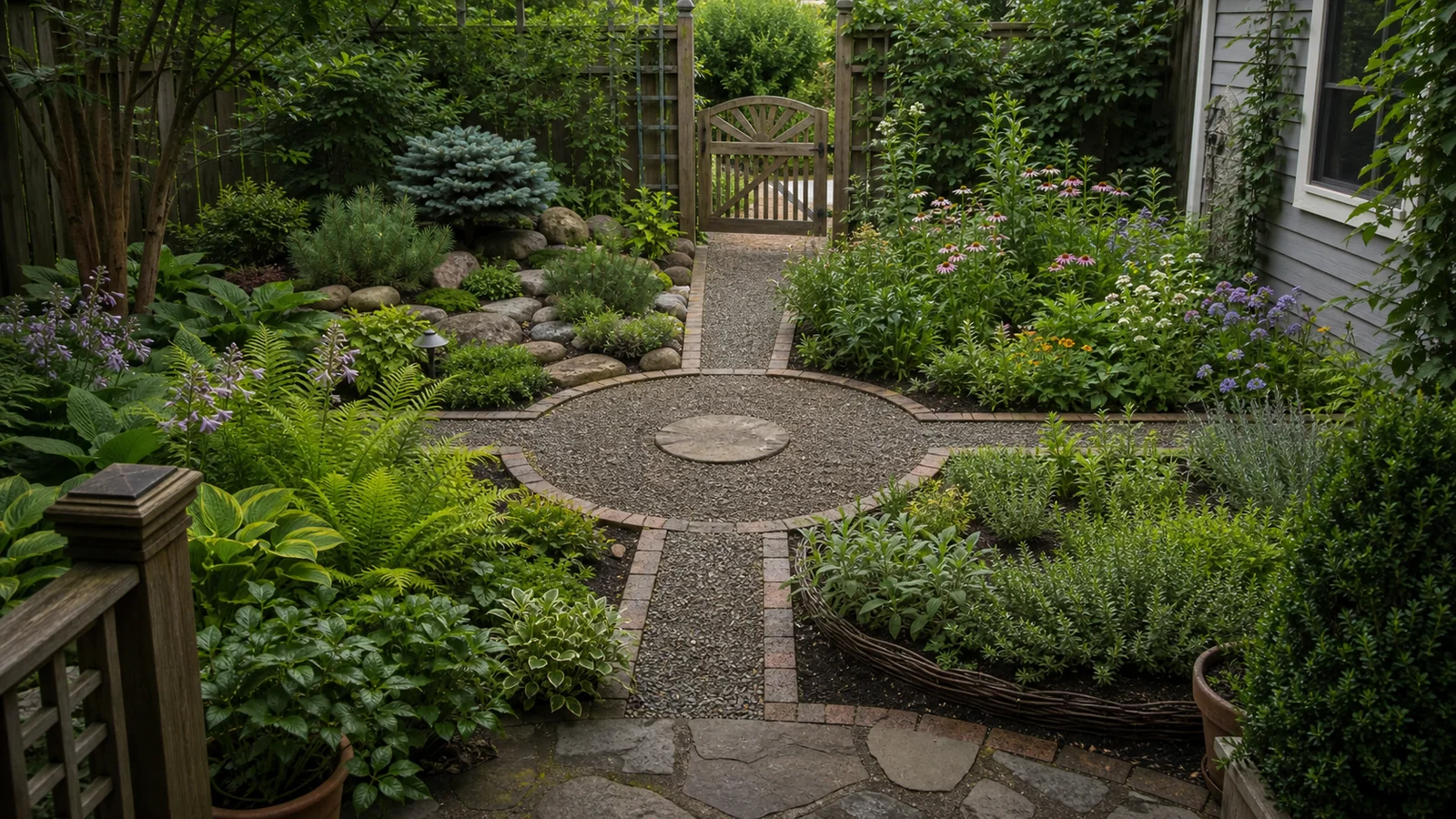
Think In Small Garden Rooms
Inniswood Metro Gardens is useful to homeowners because it shows how many garden moods can fit inside one landscape. The Westerville, Ohio garden is known for themed areas, woodland paths, herb and rose gardens, pollinator planting, a children’s garden, and quiet shaded corners. At home, that does not mean you need a large property. It means you can give different parts of the yard different jobs.
Instead of treating the whole yard as one vague space, divide it into small garden rooms: a shady texture bed, a herb corner, a pollinator strip, a quiet seat, a path, and maybe one playful detail.
Use Inniswood Metro Gardens as a lesson in organization. Each area can have its own feeling, but the paths, materials, and repeated plants should make the yard feel connected.
Start With One Circle Or Hub
A circular space can make several garden rooms feel related. It gives paths somewhere to meet and gives the eye a calm center. In a home yard, the circle can be very small: a gravel pad, a stepping-stone ring, a round planter, a birdbath area, or a simple turn in a path.
Use the hub to connect zones:
| Zone | Home version | What it adds |
|---|---|---|
| Shade garden | Ferns, hostas, hellebores, or woodland shrubs | Calm texture |
| Herb garden | Thyme, parsley, chives, sage, or mint in pots | Scent and usefulness |
| Flower pocket | Perennials, annuals, or pollinator plants | Seasonal color |
| Rock or conifer corner | Dwarf evergreens, stones, and low groundcovers | Year-round structure |
| Quiet seat | Bench, chair pair, or low wall | A reason to pause |
The hub does not need to be formal. It just needs a readable shape. Gravel with brick edging, a circle of stepping stones, or a round mulch area can be enough.
Before installing it, sketch the yard from above. Our gardening draw guide can help you test whether a hub improves movement or only adds clutter.
Make Shade A Feature, Not A Problem
Many homeowners treat shade as the place where flowers fail. Inniswood-style thinking turns shade into its own garden room. Ferns, foliage, bark, stone, mossy textures, and pale blooms can make a shaded area feel rich.
Start with the shade pattern. Is the space dry under trees, damp near a drain, bright in the morning, or dark most of the day? That answer matters more than the plant label.
Good shade-garden roles include:
- Large leaves for visual weight
- Fine ferns or grasses for softness
- Evergreen shrubs for winter shape
- Pale flowers or variegated foliage for brightness
- Stepping stones so feet do not compact the soil
- A small bench or pot to make the area feel intentional
Keep the plant palette restrained. Shade gardens can become visually noisy when every plant has a different variegation pattern. Repeat a few textures and let leaf contrast do the work.
Our hostas for shade gardens article goes deeper on using leaf size, color, and spacing to make shaded beds feel designed.
Give Herbs Their Own Practical Corner
An herb garden does not need to be large or ornamental to be useful. It needs light, drainage, easy access, and enough containment for assertive plants. If you borrow one idea from a themed public garden, make it the idea of a dedicated herb corner.
Place herbs where you will use them. Near a kitchen door, grill, patio table, or sunny path is better than a hidden back bed. Keep herbs that like different conditions in separate containers if needed.
Try a simple structure:
- A low rectangle of gravel or pavers
- A few terracotta pots grouped by water needs
- A small edging plant such as thyme along a path
- Chives or parsley near the front for easy cutting
- Mint in a pot, never loose in the bed
- A flat stone or small stool for harvest and watering
Herbs can also help the garden feel sensory. Scent, texture, and useful harvest make a small corner more engaging than flowers alone.
Use A Gate Or Trellis For The Secret-Garden Feeling
Inniswood Metro Gardens includes intimate garden moments that feel slightly hidden. At home, a gate, trellis, arbor, or narrow opening can create that feeling without a large yard.
A threshold works because it changes the pace. You move from patio to path, from lawn to shade, or from open yard to quiet corner. That shift makes the garden feel deeper than it is.
Good threshold ideas include:
| Threshold | Best use | Keep in mind |
|---|---|---|
| Simple wood gate | Side yard or fenced garden | Leave room to swing |
| Narrow trellis | Entry to a vegetable or herb corner | Choose a restrained vine |
| Paired pots | Patio edge or path start | Easier than construction |
| Stepping-stone gap | Lawn to planting bed | Works well in small yards |
| Low arch | Children’s or reading nook | Keep it sturdy and safe |
Do not add a threshold where it blocks work. You still need to move a hose, carry tools, prune shrubs, and reach beds. A pretty opening should make the garden easier to understand, not harder to maintain.
For a family-friendly version of garden discovery, our Glenwood Gardens design lessons article shows how loops, benches, and playful details can work at home.
Build One Pollinator Pocket
Pollinator planting is most useful when it is planned, not scattered. Choose one sunny pocket and make it generous enough to register from a distance. A small but repeated group of flowers usually works better than single plants dotted everywhere.
Use plants that fit your region and avoid invasive seed mixes. Aim for a long season of bloom, different flower shapes, and some seedheads for texture. Keep the bed close enough to enjoy, but not so tight against a path that bees and people are forced into the same narrow space.
A home pollinator pocket might include:
- A few spring bloomers near the edge
- Summer flowers in repeated groups
- Late-season asters, goldenrods, or regionally suitable equivalents
- Grasses or seedhead plants for fall texture
- A water source only if it can be kept clean
- A clean border so the planting looks intentional
If the area is small, choose fewer varieties. Three strong plant groups can be easier to maintain than a miniature meadow with too many species.
Add A Rock Or Conifer Corner For Winter
Themed gardens often work because they include year-round structure. Flowers cannot carry the whole design. A small rock, conifer, or evergreen corner can keep a yard from looking empty in winter.
Use this idea carefully. Dwarf conifers and rocks can look stiff if they are dropped into the yard without context. Connect them with nearby materials: gravel path, stone edging, low groundcovers, or a simple evergreen backdrop.
Good places for this corner include:
- Near a path turn
- Beside a gate or entry
- At the edge of a shade garden
- In a slope that already needs erosion control
- Near a winter view from the house
Choose plants by mature size, not by how cute they look in small pots. A “dwarf” conifer can still become too large for a tight corner over time.
Keep The Rooms Connected
The danger of a themed-garden approach is making the yard feel like several unrelated displays. The fix is repetition.
Repeat at least one of these across the whole design:
- The same path material
- One edging style
- A recurring pot color
- Three plant types used in more than one room
- A consistent wood tone for gates, trellises, or benches
- One flower color that appears in several zones
You can still vary the mood. The shade bed can feel quiet, the herb corner practical, and the pollinator pocket bright. The repeated details make them belong to the same home.
Our Green Spring Gardens ideas article also focuses on texture, calm planting, and how public-garden ideas can translate into livable home spaces.
Turn It Into A Weekend Yard Plan
Do not try to build every garden room at once. Start with the central move that will make the yard easier to understand.
Try one weekend project:
- Mark a circular gravel hub with a hose before digging.
- Add stepping stones from patio to shade bed.
- Group herbs into one useful corner near the kitchen door.
- Place a small gate or trellis at the start of a path.
- Convert one sunny strip into a pollinator pocket.
- Add a dwarf evergreen and stone group near a winter view.
- Move a chair into the quietest garden room and plant around it.
Stand back after the first project. If the yard feels more organized, build the next room slowly. If it feels crowded, simplify the plan before adding more.
FAQ
What is the easiest Inniswood Metro Gardens idea to use at home?
Start by dividing the yard into small garden rooms. A shade bed, herb corner, pollinator pocket, and quiet seat can make even a compact yard feel more intentional.
Do garden rooms need walls?
No. A garden room can be shaped by paths, edging, shrubs, pots, a trellis, or a change in planting style. Partial enclosure is often enough.
Can I mix herbs, flowers, and shade plants in one small yard?
Yes, if each group has the conditions it needs. Put sun-loving herbs and pollinator flowers in brighter spots, and use shade plants where trees or buildings already shape the light.
How do I stop a themed garden from looking cluttered?
Repeat materials and limit plant choices. Use one path material, one edging style, and a few repeated plants so the themed areas feel connected rather than random.
Give Every Corner A Job
Inniswood Metro Gardens design ideas translate well because they are about roles. One area can be quiet, one useful, one colorful, one playful, and one structured for winter.
Start with a hub or path, then build small garden rooms around it. When every corner has a job and the materials repeat, a normal yard can feel richer without becoming complicated.
You might also like
The Gardens: Make a Yard Feel Intentional
Use the gardens idea to turn scattered beds, paths, seating, and planting into a yard that feels calm, usable, and connected.
Parrot Mountain and Gardens Yard Ideas
Use Parrot Mountain and Gardens as a guide for color, paths, perches, shade, and seating in a lively home yard.
Houmas House Plantation and Gardens Ideas for Home
Borrow Houmas House Plantation and Gardens Louisiana ideas for shade, brick paths, water, and layered planting with care.