Green Spring Gardens With Texture and Calm
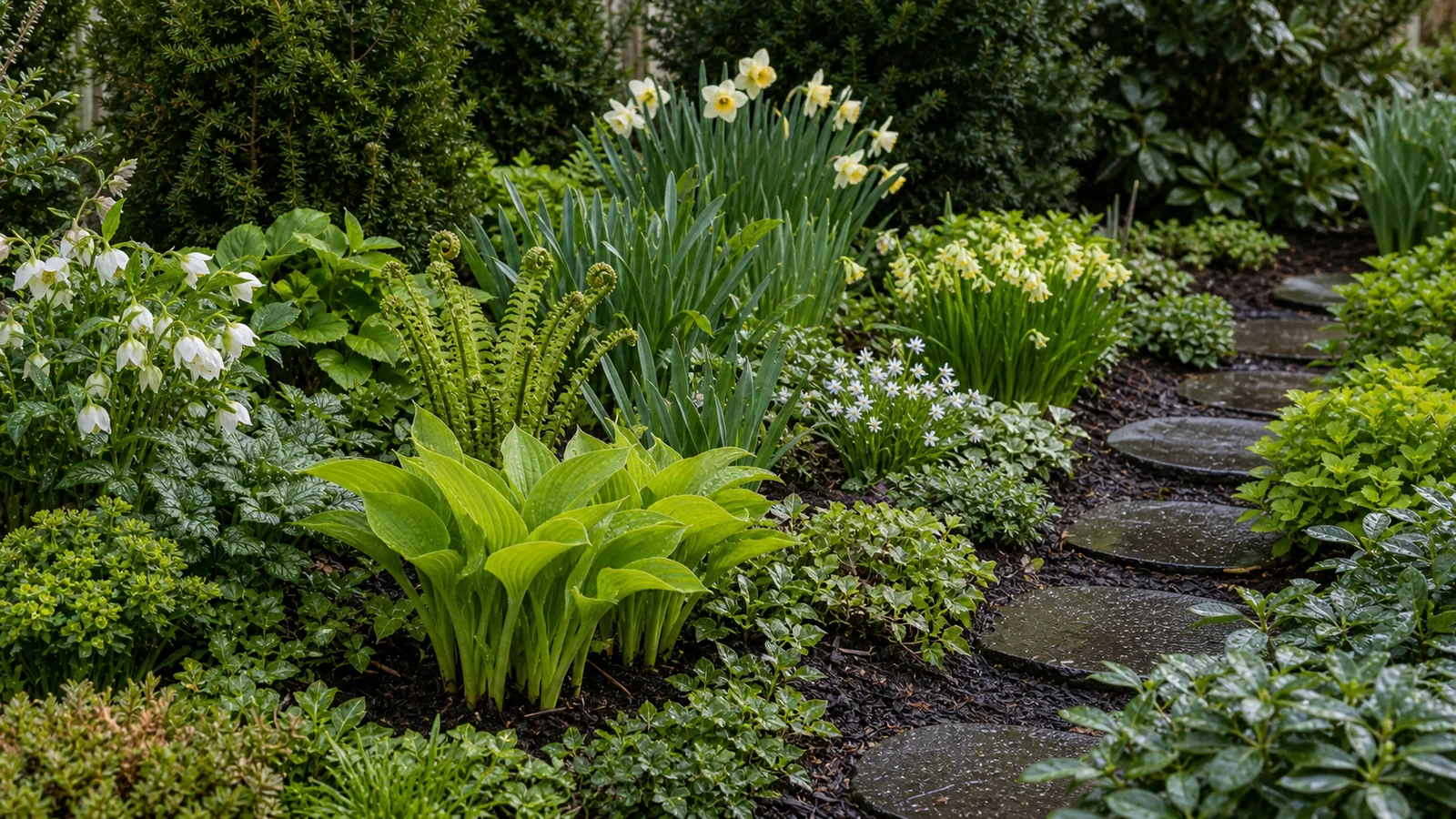
Build Green Spring Gardens Around Fresh Growth
Green spring gardens feel restful because they do not rely on one loud bloom moment. They use new foliage, evergreen structure, bulbs, early perennials, damp soil, and a few pale flowers to make the whole space feel awake.
This approach works especially well for real home gardens. A front bed, shaded side path, patio edge, or small backyard border can look seasonal without needing hundreds of tulips. The green layers carry the design after the first flowers fade.
The aim is not an all-green garden that feels flat. It is a spring garden where green is the main language and flowers act like punctuation.
Start With Evergreen Backgrounds
Early spring beds often look thin because many perennials are still waking up. Evergreen plants solve that problem. They give the garden a background before bulbs open and before summer plants have size.
Use evergreen shrubs, clipped forms, low box-like structure where suitable, dwarf conifers, evergreen ferns, hellebores, or tidy groundcovers as the anchor. In a small garden, one evergreen shrub near the back of a border can make the rest of the planting look more deliberate.
Keep the scale modest. A narrow front path does not need a heavy hedge. A compact shrub, a few evergreen perennials, or a low mass of groundcover may be enough.
When the background is green and steady, early flowers can be softer. White narcissus, pale yellow daffodils, snowdrops, crocus, primroses, and hellebores stand out more against evergreen leaves than they do in bare soil.
Choose Three Greens, Not One
Green spring gardens need contrast. If every leaf is the same middle green, the bed can look like one soft blur.
Aim for at least three kinds of green:
| Green tone | What it adds | Example uses |
|---|---|---|
| Deep evergreen | Weight and winter carryover | Yew, holly, boxwood alternatives, evergreen ferns |
| Fresh mid-green | The main spring feeling | Daffodil foliage, hardy geraniums, young perennials |
| Chartreuse or lime | Light and energy | Hostas, euphorbia, golden oregano, young grass blades |
| Blue-green | Calm contrast | Some sedums, lavender foliage, blue fescue, certain hostas |
| Variegated green | Brightness in shade | Variegated ivy, carex, brunnera, hostas |
Use the brightest green sparingly. Chartreuse can wake up a dark corner, but too much can feel sharp. Repeat it in two or three places so it looks intentional.
Layer Bulbs Through Foliage
Spring bulbs are useful because they arrive before much of the garden has filled in. They look better, though, when they grow through foliage rather than standing alone in bare patches.
Plant bulbs in groups or loose drifts near perennials that emerge later. Daffodil foliage can rise through low groundcovers. Crocus and snowdrops can sit near deciduous shrubs before the canopy fills. Tulips can work in containers or protected beds, though they may need more replanting in some climates.
Choose bulb colors that support the green palette. White, cream, pale yellow, soft blue, and gentle purple keep the feeling calm. A few stronger colors can be beautiful, but let them be accents rather than the whole story.
After bloom, leave bulb foliage until it yellows naturally. That awkward period is another reason to surround bulbs with expanding perennials, ferns, or groundcovers. The fresh leaves help hide the fading bulb foliage without cutting it too early.
Use Leaf Shape For Movement
Spring foliage is not only about color. Leaf shape creates movement and depth.
Combine upright, strappy leaves with rounded leaves, fine fronds, and low mats. Daffodil foliage gives vertical lines. Hostas and heucheras give broader leaves. Ferns add unfurling texture. Hardy geraniums, violets, ajuga, or creeping thyme can soften the ground plane.
If you want a calm look, repeat the same shape in several places. If you want a livelier bed, place contrasting textures beside each other. A fern next to a broad hosta leaf feels different from a row of plants with similar rounded leaves.
This is where design language becomes useful. If terms such as texture, repetition, and focal point feel fuzzy, our guide to gardening language translates them into practical choices.
Let White And Pale Yellow Carry The Flowers
A green spring garden does not need to avoid flowers. It simply uses flowers in a quieter way.
White flowers make green look cleaner. Pale yellow feels warm without taking over. Soft blue and lavender can cool the palette. These colors are easy to repeat across bulbs, early perennials, and containers.
Try combinations like:
- Snowdrops with evergreen groundcover and dark mulch
- Pale daffodils with emerging hostas and ferns
- White hellebores with glossy evergreen leaves
- Primroses tucked near a shady path
- Blue muscari or squill under shrubs with fresh spring foliage
- Cream violas in pots beside a green patio planting
Use brighter tulips or bedding plants only where you want a clear focal point. A single container by the door can take stronger color without disturbing the calm of the whole garden.
Make Paths And Edges Part Of The Palette
Green looks stronger when the hardscape around it is simple. A stepping-stone path, gravel strip, clay pot, weathered bench, or low timber edge can frame the fresh growth without competing with it.
Dark mulch makes pale flowers stand out. Gray stone cools bright greens. Terracotta warms a spring container group. Weathered wood softens a woodland-style bed.
Edges matter because early spring plants are often small. A crisp bed edge, a narrow path, or a grouped set of pots can make young growth look intentional before the garden fills out.
If your spring garden feels messy, do one structural task before buying more plants. Define the edge, clear winter debris, refresh mulch lightly, or place containers in a clearer group.
Plan For The Weeks After Peak Spring
The mistake in many spring gardens is designing only for the first bloom. Once bulbs fade, the space can collapse into yellowing leaves and gaps.
Plan the next layer now. Use perennials that expand as bulbs finish, shrubs that leaf out after early flowers, and containers that can be refreshed as weather warms. Hardy geraniums, ferns, hostas, heucheras, salvia, nepeta, ornamental grasses, and compact shrubs can all help, depending on climate and light.
A simple sequence might look like this:
| Moment | What carries the garden | What to add |
|---|---|---|
| Late winter to early spring | Evergreens, hellebores, snowdrops | Tidy paths, cut old foliage, top up mulch |
| Early to mid spring | Daffodils, crocus, fresh perennial leaves | Add cool-season containers |
| Late spring | Hostas, ferns, hardy geraniums, shrubs | Hide bulb foliage with expanding plants |
| Early summer | Perennials, herbs, grasses, patio pots | Refresh containers and trim spent spring growth |
This keeps the garden from feeling like a one-week event.
Adapt The Look For Sun Or Shade
Green spring gardens work in both sun and shade, but the plant choices change.
In sunnier spaces, use daffodils, tulips in selected spots, alliums, euphorbia, hardy geranium, nepeta, sedum, lavender, grasses, herbs, and compact shrubs. Add pale flowers where they will not bleach out in harsh light.
In shade or part shade, lean into hellebores, ferns, hostas, brunnera, heuchera, carex, primroses, snowdrops, and shade-tolerant spring bulbs. Dappled light makes green foliage look especially rich.
Containers can bridge either condition. A shady porch might use ferns, heuchera, violas, and ivy. A sunny patio might use herbs, pale pansies, compact grasses, and bulbs planted in fall.
Keep Maintenance Gentle
Green spring gardens look lush, but they do not need to be fussy. The main care is seasonal cleanup, watering new plants, managing weeds early, and letting bulb foliage ripen before cutting it back.
Avoid digging constantly among bulbs and emerging perennials. Mark where plants are if you forget. Pull weeds while they are small, because spring weeds grow quickly and can disappear into fresh foliage.
Water new plantings during dry spells, especially containers and recently planted perennials. Established spring beds may need less water, but young plants and bulbs in pots dry faster.
After flowering, remove spent blooms if they look untidy, but leave useful foliage. The leaves are feeding bulbs and building next year’s display.
FAQ
What plants make a spring garden look green and full?
Use a mix of evergreen shrubs, ferns, hostas, hellebores, hardy geraniums, spring bulb foliage, carex, heuchera, and low groundcovers. Choose plants that match your light and climate.
How do I add flowers without losing the calm green look?
Use flowers as accents. White, cream, pale yellow, soft blue, and lavender blooms blend naturally with green foliage and feel calmer than a high-contrast mix of many bright colors.
When should I plant spring bulbs?
Most spring-flowering bulbs are planted in fall before the ground freezes, with timing adjusted for local climate. In spring, you can still add nursery-grown bulbs in pots or plan where fall bulbs should go.
How do I hide fading daffodil or tulip leaves?
Plant bulbs near perennials and groundcovers that expand after the bulbs bloom. Hostas, hardy geraniums, ferns, and other emerging foliage can soften the yellowing leaves while bulbs recharge.
Let Green Do The Quiet Work
Green spring gardens succeed because they give the season a steady base. Evergreen structure holds the bed together, bulbs create early lift, fresh foliage adds texture, and pale flowers bring just enough sparkle.
Start with one small area where spring already feels promising. Add contrast in leaf shape, repeat a few green tones, and plan for what happens after the first bloom. The result is a garden that feels fresh, calm, and alive for more than a single weekend.
You might also like
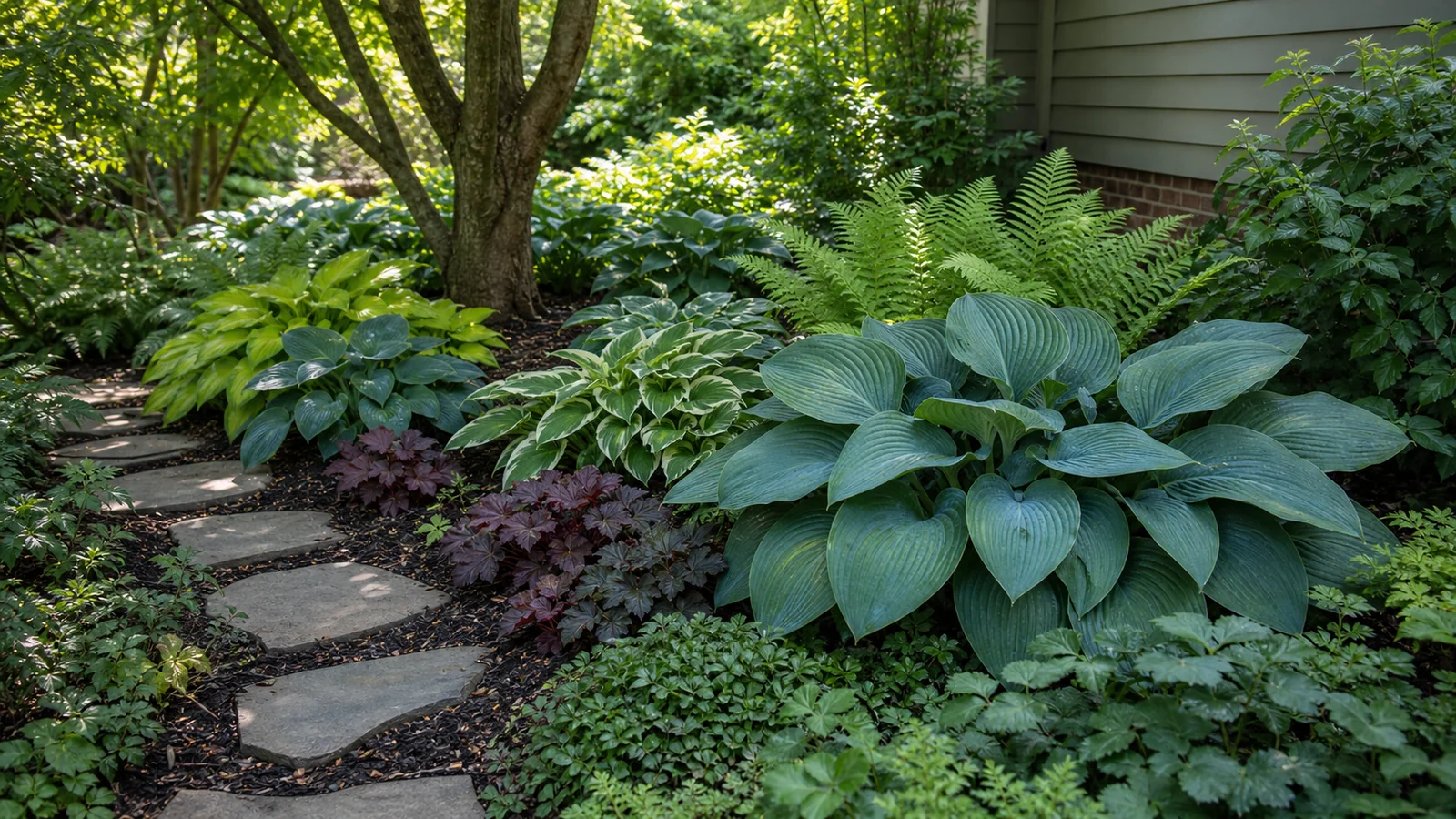
Hostas for Shade Gardens With Lasting Texture
Use hostas for shade gardens by matching leaf color, size, companions, moisture, and slug protection to the site.
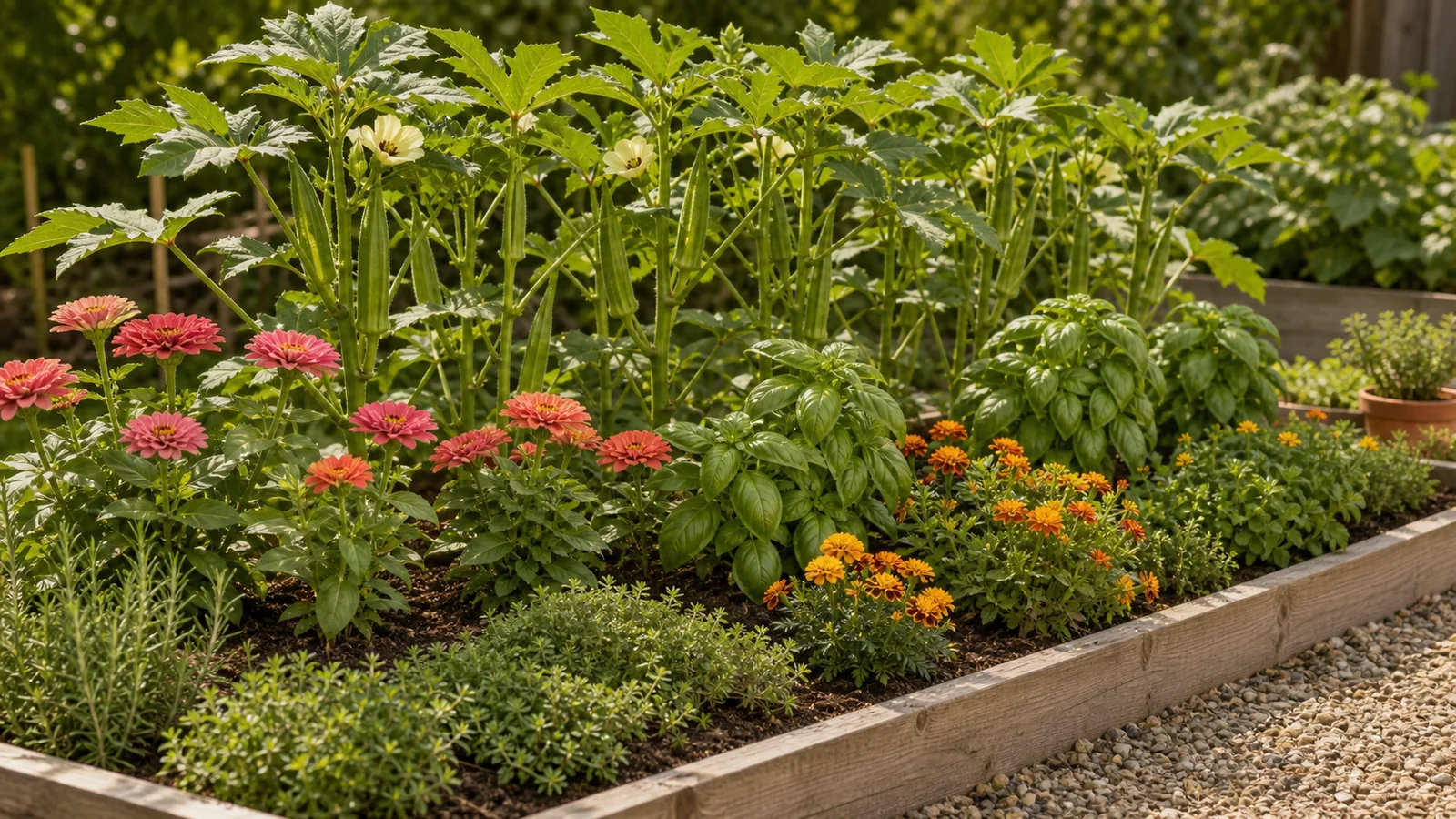
Companion Gardening Okra Bed Partners
Plan companion gardening for okra with sun, spacing, herbs, flowers, and low crops that support harvest instead of crowding.
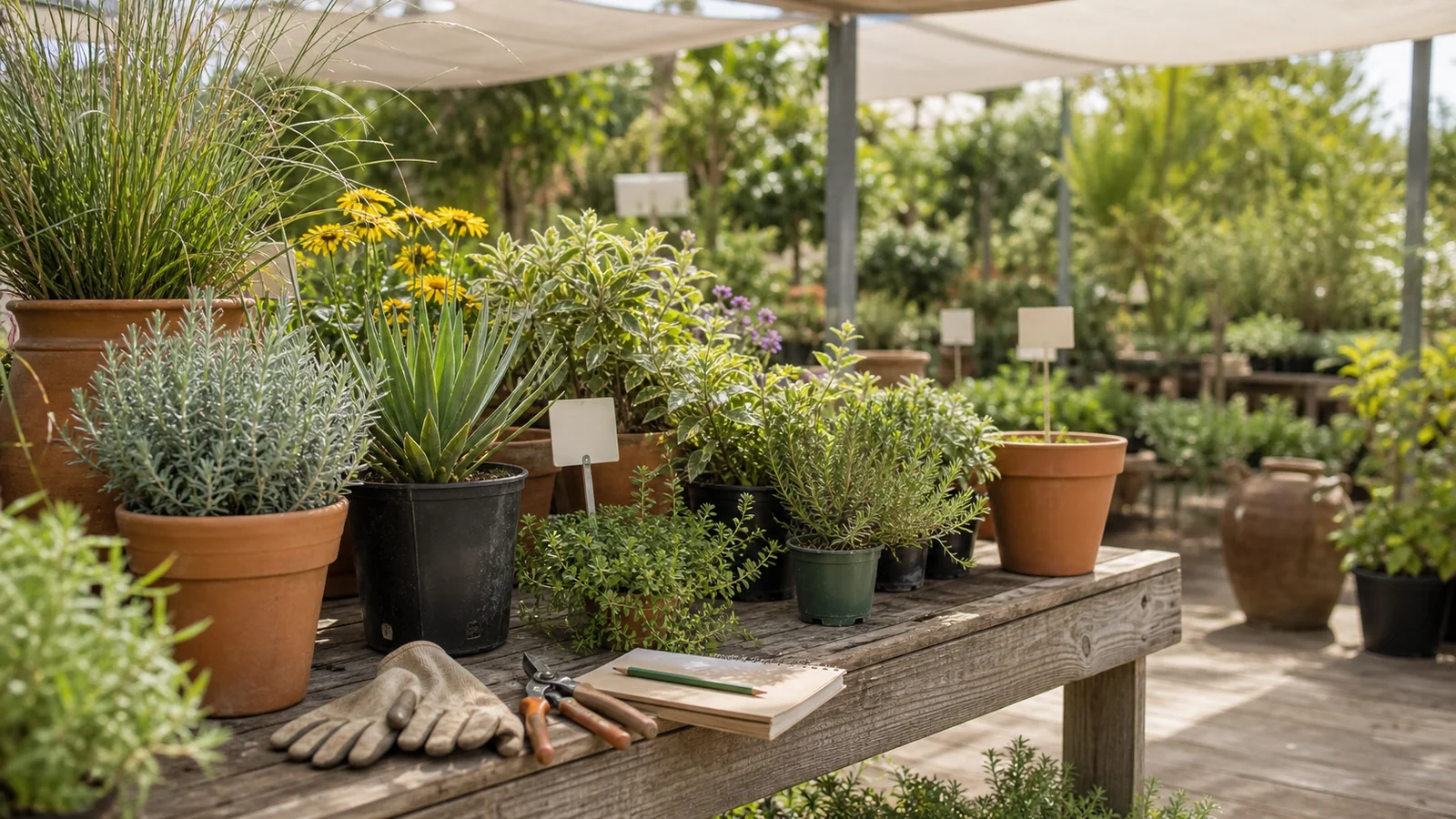
North Haven Gardens Ideas for Hot Yards
Use North Haven Gardens as a model for climate-aware plant shopping, heat-ready beds, shade planning, and practical yard refreshes.