The Estate at Florentine Gardens Yard Ideas
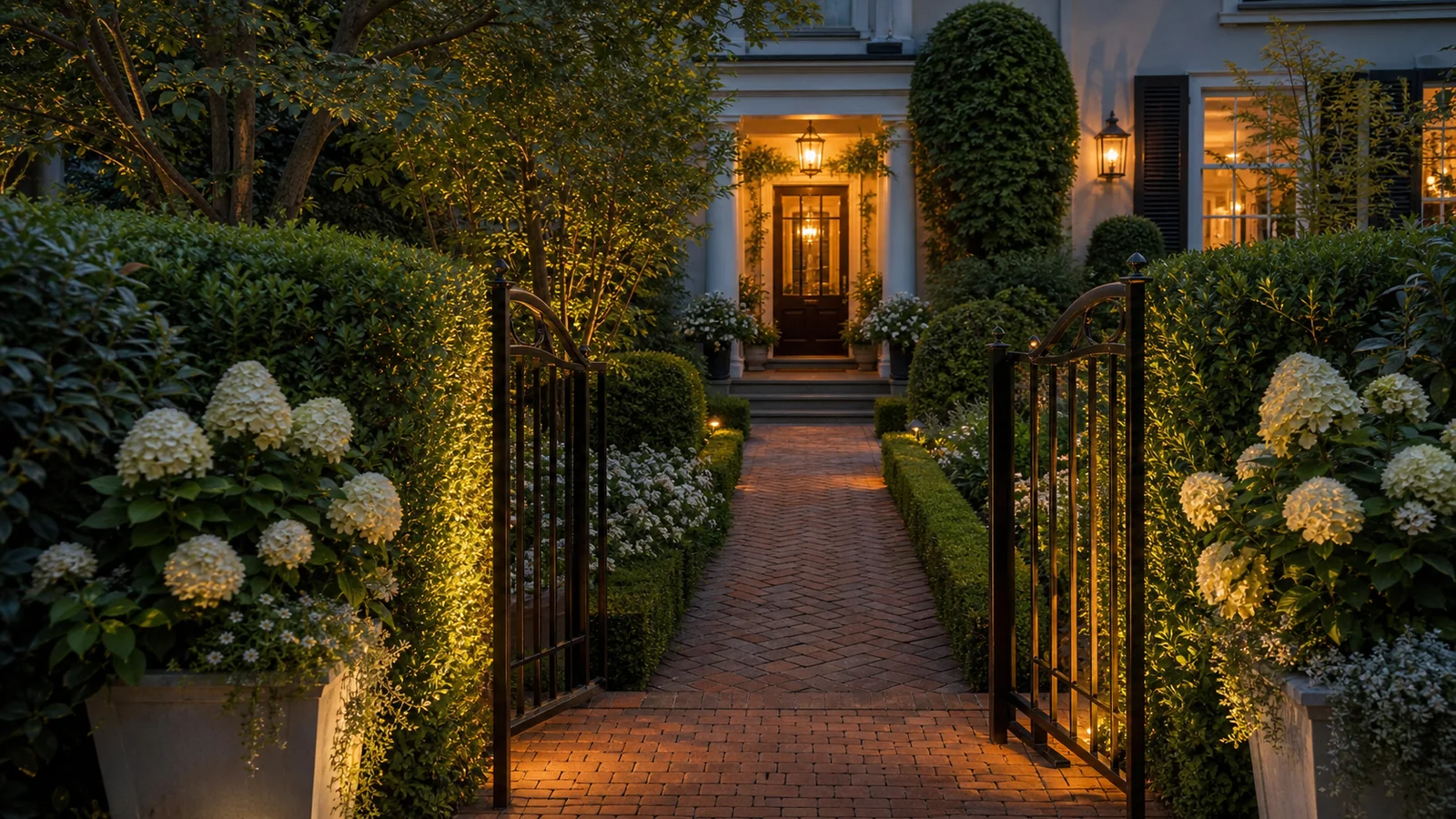
Borrow The Estate Feeling, Not The Wedding Scale
The Estate at Florentine Gardens is known as a polished New Jersey event venue with formal indoor rooms, outdoor garden ceremony space, a veranda, landscaped grounds, and strong photo moments. A home yard does not need that level of grandeur. The useful lesson is smaller: create a garden that feels prepared before anyone arrives.
For a homeowner, that means clear paths, edited planting, one strong arrival view, and outdoor spaces that can handle real use. The garden should feel calm on an ordinary Tuesday, not only when the furniture is arranged for a party.
Use The Estate at Florentine Gardens as inspiration when you want a front walk, side yard, patio, or backyard corner to feel more intentional. The best ideas translate into structure, light, and flow rather than expensive decoration.
Give The Arrival A Clear First View
Event gardens work hard at first impressions. Guests arrive, understand where to go, and see a composed view before they reach the main space. A home garden can use the same discipline at a smaller scale.
Stand at the curb, driveway, gate, or back door and ask what the eye meets first. If the view is a tangle of pots, bins, hoses, bare soil, or unrelated plants, choose one thing to become the anchor.
Good arrival anchors include:
- A pair of planters beside the door or gate
- A clean bed edge along the walk
- A small tree or upright shrub at a path turn
- A bench, birdbath, or simple urn at the end of a view
- A clipped evergreen or repeated grass group beside steps
- A warm wall lantern or low path light near the entrance
Keep the first view simple. The entrance does not need every favorite plant. It needs enough order that the rest of the garden feels cared for.
If you are still deciding where the main view should land, sketch it before shopping. Our gardening draw guide can help you map the arrival path, the focal point, and the maintenance space before anything is planted.
Use Formal Paths With Softer Planting
The Estate at Florentine Gardens has the kind of setting where paths, terraces, and landscaped edges make outdoor areas feel ready for people. At home, a path does not need to be wide or grand to do that job. It simply needs to look deliberate.
Choose one main surface and repeat it. Brick, stone, gravel, decomposed granite, concrete pavers, or stepping stones can all feel formal enough if the edges are clean and the route is easy to follow.
Then soften the path with planting instead of clutter. Let low greenery, seasonal flowers, or clipped shrubs frame the route without spilling into walking space.
| Path decision | More polished choice | Home caution |
|---|---|---|
| Main route | One clear path from entry to destination | Avoid too many competing shortcuts |
| Edge | Metal, stone, brick, or crisp spade edge | Keep gravel and mulch from mixing |
| Plant height | Low near walking areas, taller at turns | Do not block knees, bags, or tools |
| Rhythm | Repeat one plant or pot style | Avoid a different accent at every step |
| Destination | Bench, gate, patio, or porch | Make sure the path actually leads somewhere |
The contrast matters. A firm path gives the garden structure. Soft planting makes it feel welcoming rather than stiff.
Create One Ceremony-Like Moment
Outdoor ceremony spaces are designed around attention. There is a place to stand, a framed backdrop, and enough surrounding space for people to gather. A backyard can borrow that idea without pretending to host a wedding.
Create one ceremony-like moment where the garden feels centered. It might be a bench under an arbor, a pair of chairs facing a planted wall, a small dining table beneath string lights, or a quiet spot where a path meets a flower border.
The structure is simple:
- Choose the place people naturally pause.
- Give it a backdrop, such as shrubs, a fence, a trellis, or tall grasses.
- Add a stable surface underfoot.
- Keep the view in front uncluttered.
- Use one vertical element to frame the space.
This kind of moment is useful even if you never entertain. It gives the yard a reason to exist beyond mowing and maintenance. It also helps the garden photograph well, which usually means it reads clearly in real life too.
Let The Veranda Idea Shape The Patio Edge
A veranda works because it sits between indoors and outdoors. It gives people a sheltered transition, a place to look out, and a comfortable edge before they step into the garden. Many homes have a smaller version: a porch, deck, stoop, balcony, covered patio, or back-door landing.
Do not treat that edge as leftover space. It is one of the most important parts of the yard.
Make the transition feel finished with:
- A durable outdoor rug or clean paving surface
- Two or three containers that match in material
- A narrow table or stool for drinks and garden tools
- A plant that screens the least attractive view
- A clear route from door to seat, grill, or garden path
- Lighting that helps the door area feel safe after dusk
The patio edge should not become storage by default. If shoes, toys, cushions, tools, or bags always land there, add a real storage bench or cabinet before adding more plants.
For a more relaxed outdoor living version, see our Callaway Gardens Christmas lights ideas article, which focuses on glow, routes, and gathering areas rather than formal structure.
Make Gardens Work In More Than One Season
The Estate at Florentine Gardens presents its grounds as a year-round setting, which is a useful reminder for home gardens. A yard that depends on one week of bloom can feel unfinished for the rest of the year.
Build the garden in layers:
- Evergreens for shape
- Paths and edging for structure
- Perennials for seasonal return
- Containers for flexible color
- Lights for evening use
- Furniture or a focal point for purpose
Flowers still matter, but they should not carry the whole design. Use bloom where people will notice it most: by the entry, near the seating area, around a path turn, or in containers that can be refreshed when the season changes.
In colder regions, evergreens, grasses, bark, stone, and lighting do much of the winter work. In hot regions, shade, drought-tolerant shrubs, and durable paving may matter more. The goal is not one plant list. It is a garden that still has a shape when the headline flowers are gone.
Use Lighting To Guide, Not Overwhelm
Polished event settings often use light to make gardens feel safe, romantic, and easy to navigate. At home, garden lighting should do the same without turning the yard into a stage.
Start with function. Light the door, steps, main path, and any level change before adding decorative glow. Then add one or two softer accents where the garden deserves attention after dark.
Good lighting choices include:
| Area | Best light type | Design note |
|---|---|---|
| Door or gate | Wall lantern or downlight | Keep glare out of eyes |
| Steps | Low step or path lights | Prioritize safety |
| Main path | Warm, shielded path lights | Space them quietly, not like runway lights |
| Seating area | String lights, sconce, or table lamp | Use warm color temperature |
| Focal plant | Small uplight or grazing light | Choose one feature, not every shrub |
Avoid cold blue-white light. Warm light usually works better with brick, stone, foliage, and evening skin tones. It also keeps the garden calm.
Edit The Planting Like A Venue Team Would
Formal venues look polished partly because somebody edits constantly. Dead plants are replaced. Containers are refreshed. Overgrown edges are cut back. A home garden can feel more elegant with the same mindset, even on a smaller budget.
Walk the garden once a month and look for visual noise:
- Empty pots that no longer have a job
- Plants leaning across a path
- Too many container styles near one door
- Faded annuals that need replacing or removing
- Shrubs hiding windows, lights, or house details
- Furniture that blocks the easiest route
- Garden decor that competes with the plants
Editing is not the same as making the garden bare. It means every visible item earns its place. A few well-kept containers often feel richer than a dozen tired ones.
If you like a romantic, layered garden mood, our Savannah Botanical Gardens yard lessons guide shows how structure and softness can work together around paths, shrubs, and seasonal flowers.
Turn The Idea Into A Weekend Refresh
Use The Estate at Florentine Gardens as a prompt for one polished zone, not a whole-property makeover. Choose the place guests or family see first: the front walk, side gate, patio edge, or route from back door to seating.
A practical weekend plan might look like this:
- Clear the arrival area and remove anything that does not belong there.
- Recut or clean the main bed edge.
- Choose one path or paving surface to emphasize.
- Add two matching containers or one strong focal plant.
- Prune plants that block the route or view.
- Add warm light near the door, steps, or path.
- Place one seat, stool, or small table where people naturally pause.
Stop before the area becomes crowded. The most useful lesson from a formal estate garden is restraint. A clear route, a framed view, and a few cared-for details can make a normal home yard feel composed without losing its everyday comfort.
You might also like
Coxhall Gardens Design Lessons For Home
Use Coxhall Gardens as a model for formal lawns, framed walks, children's corners, water views, and calm backyard structure.

McKee Jungle Gardens Ideas for Tropical Yards
Borrow McKee Jungle Gardens ideas for shaded tropical layers, water bowls, slow paths, old-stone texture, and courtyard scale.
Wonder Gardens Ideas for Tropical Home Yards
Borrow Wonder Gardens ideas for banyan shade, winding paths, water, orchids, wildlife edges, and a lush but manageable yard.