Mercer Botanic Gardens Design Lessons
Borrow The Garden, Not The Scale
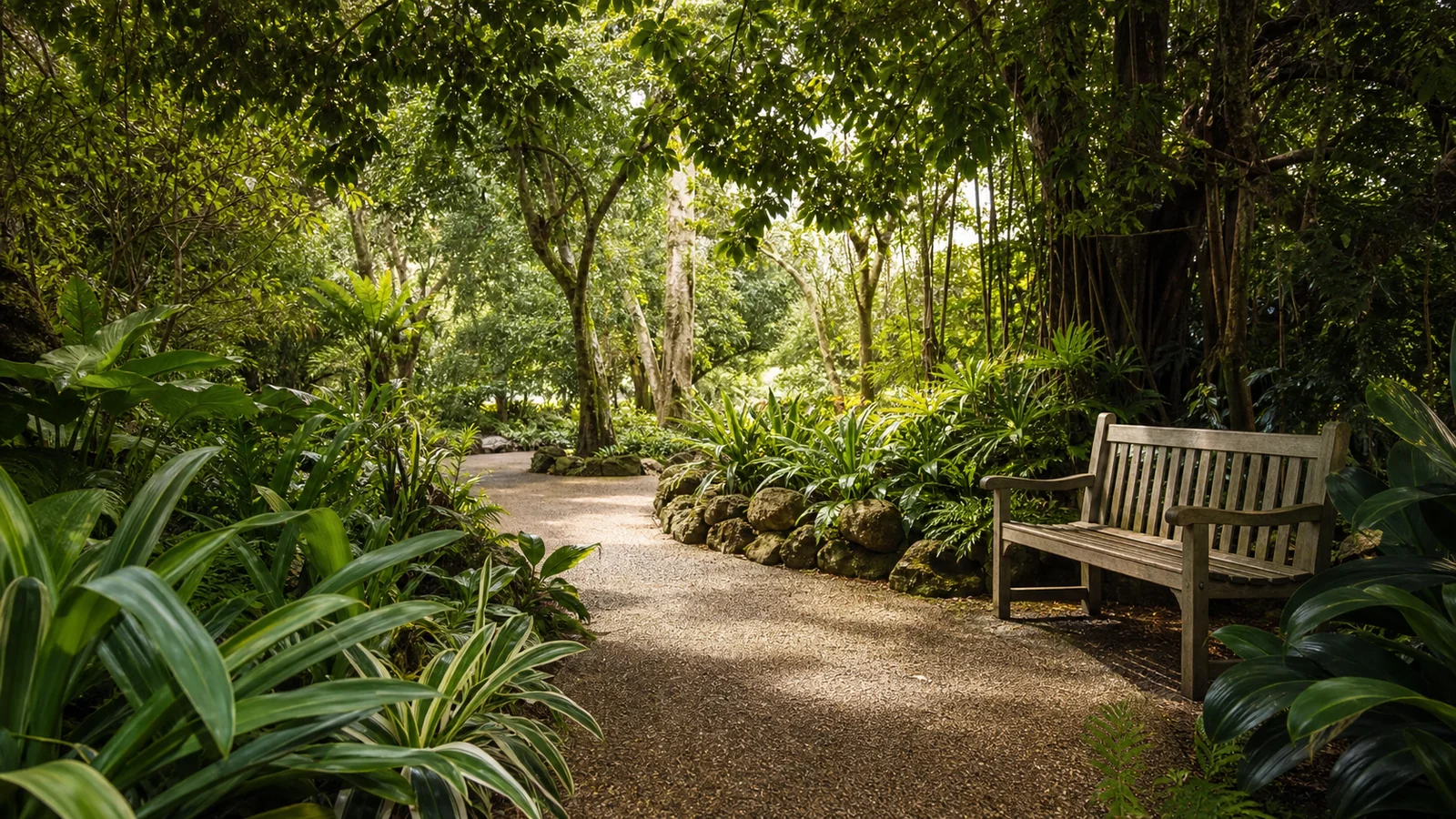
Mercer Botanic Gardens is the kind of place that can make a home gardener feel both inspired and slightly overwhelmed. It has trails, plant collections, wooded views, water, seasonal color, and enough space for plants to grow into real presence. Most home yards do not have that scale.
That is fine. The useful lesson is not to copy the whole garden. It is to borrow the parts that make a walk feel calm: layered planting, comfortable paths, changing shade, repeated textures, and clear moments where the eye can rest.
Use Mercer Botanic Gardens as a design reference for a home yard that needs more depth. Even a small patio, side yard, or front bed can feel more collected when it borrows a botanical garden’s sense of sequence.
Start With A Walking Route
Public gardens are designed around movement. You do not see everything at once. Paths bend, plants frame the next view, and small pauses make the route feel longer than it is.
At home, start with one route you already use. It might run from the driveway to the front door, from the kitchen to the patio, through a side yard, or around a small lawn. The route does not need to be formal. It only needs a clear beginning, middle, and end.
Look for three places along the route:
- A threshold, such as a gate, step, porch, or patio door
- A middle view, such as a bed edge, tree, container group, or narrow path
- A destination, such as a bench, planter, small tree, birdbath, or seating corner
Once those three moments are named, the garden becomes easier to style. You can add one stronger plant group at the threshold, softer foliage along the middle, and a simple focal point at the end.
This is often more effective than scattering plants evenly across the yard. A route with rhythm feels designed, even when the planting list is modest.
Layer Shade Instead Of Fighting It
Mercer Botanic Gardens includes wooded character, filtered light, and plantings that make shade feel rich rather than limiting. Home gardens can use the same idea, especially around mature trees, north-facing walls, covered patios, and side yards.
Shade design works best when you stop expecting every plant to flower heavily. Instead, build with leaf size, color, texture, and height. Use broad leaves near finer foliage. Let evergreen structure carry winter. Add pale flowers, variegation, or light stone where a corner needs brightness.
Useful shade layers include:
| Layer | Home garden role | Examples |
|---|---|---|
| Overhead canopy | Comfort and enclosure | Existing trees, small ornamental trees, pergola planting |
| Mid-height structure | Shape through the season | Hydrangeas, hollies, camellias, viburnum where climate allows |
| Foliage texture | Depth and movement | Ferns, hostas, carex, heuchera, brunnera |
| Ground plane | Calm and weed control | Mulch, low groundcovers, mossy stone, leaf litter where appropriate |
| Bright accents | Lift in dim spots | Pale blooms, variegated leaves, cream containers, light gravel |
If your shaded area feels flat, do not add one lonely plant. Add a small layered group. Three or five plants with different leaf shapes will usually do more for the view than one bright annual struggling in low light.
Use Plant Collections As Mini Themes
Botanical gardens often organize plants into collections. A home garden can use a smaller version of that idea. Instead of buying whatever looks good on each nursery visit, choose one mini theme for a bed or corner.
The theme can be practical, visual, or seasonal. A dry sunny bed might focus on silver leaves, ornamental grasses, and late-summer flowers. A shady entry might use glossy evergreen shrubs, ferns, and pale blooms. A patio edge might use herbs, scented foliage, and container plants.
Good home-scale themes include:
- A fern and hosta shade strip beside a path
- A pollinator-friendly sunny border with repeated perennials
- A warm patio palette of terracotta pots, herbs, and trailing plants
- A rain-garden-inspired low spot with moisture-tolerant plants
- A woodland edge with shrubs, spring bulbs, and leaf texture
The point is not botanical purity. The point is restraint. A theme helps you say no to plants that do not fit the corner, even if they are beautiful on their own.
Repeat Textures To Calm The View
A walk through a strong garden often feels peaceful because textures repeat. You may see fine grasses in several places, broad tropical-looking leaves near water, or evergreen mounds that guide the path. Repetition helps the eye understand the space.
Home yards often have the opposite problem. One plant of each type creates a restless bed. The garden may have plenty of color, but no rhythm.
Choose one texture to repeat. It might be fine fern foliage, rounded shrubs, upright grasses, strappy leaves, or glossy evergreen leaves. Repeat it in at least three places where the eye can connect the pattern.
Then add contrast carefully. If the repeated texture is fine and airy, add a few broad leaves. If the repeated texture is rounded and dense, add something upright. If the repeated color is deep green, add a small amount of chartreuse, silver, burgundy, or cream.
This approach works especially well in front gardens and narrow yards. Repeated texture creates polish without needing a complicated planting plan.
Let Water Influence The Mood
Large gardens often use water as a place to pause. A pond, stream, damp planting area, or reflective surface changes the pace of the walk. At home, the same idea can be small and practical.
You do not need a pond to borrow the mood. A birdbath, shallow bowl, rain chain, glazed pot, gravel basin, or planted low spot can create a quiet focal point. The key is to make water feel connected to planting, not dropped into the yard as an object.
Place a water feature where it can be seen from a path or window. Surround it with plants that soften the edges. Keep maintenance honest. A small birdbath that you clean regularly is better than an ambitious feature that becomes cloudy, unsafe, or ignored.
If standing water is not a good fit for your climate or household, use reflective materials instead. Glazed containers, pale stone, lantern glass, or glossy foliage can add the same hint of light without the upkeep.
Make Native And Adapted Plants Do More Work
Public gardens often show how well plants can settle when they fit the local climate. For a home yard, that lesson matters more than the exact plant list. Plants that suit heat, rainfall, soil, winter lows, and local pest pressure usually look better with less fuss.
Start by identifying the hardest condition in the bed. Is it dry shade, heavy clay, reflected heat, wet soil, deer pressure, wind, or a narrow root-filled strip? Choose plants for that condition first, then refine for color and style.
Native and well-adapted plants can help with:
- Lower watering after establishment
- Better seasonal resilience
- Food and shelter for local wildlife
- A garden that feels settled into its region
- Less dependence on high-maintenance annual replacement
This does not mean every plant must be native. It means the backbone of the garden should respect the site. Use showier plants as accents, not as the whole system.
Create A Small Resting Point
Mercer Botanic Gardens rewards slow looking. A bench, open view, bridge, or shaded pause gives people a reason to stop. Home gardens need that too.
A resting point can be very simple. It may be one bench under a tree, a chair beside a planter, a small table near herbs, or a stone at the end of a path. What matters is that the spot feels intentional and comfortable enough to use.
Check the practical details:
- Is there shade or seasonal comfort?
- Can you reach the spot without stepping through wet grass?
- Is there a view worth facing?
- Is the seating stable and scaled to the space?
- Can nearby plants grow without crowding knees and shoulders?
If a bench looks charming but never gets used, move it. The best resting point is often closer to the house than expected, where it fits a morning coffee, a short phone call, or five minutes after watering.
Design For Recovery After Weather
Gardens near warm, storm-prone, or humid regions need resilience. Heavy rain, heat, wind, dry spells, and sudden cold can expose weak design quickly. A home garden inspired by a public garden should still be easy to repair after weather moves through.
Use durable structure first. Paths should drain. Edges should be clear. Mulch should stay in place. Large pots should be stable. Plants should have mature spacing so air can move through them.
Avoid filling every gap with delicate plants. Open soil will not stay open forever, but plants need room to grow and recover. A crowded bed can trap moisture, hide damage, and make cleanup harder.
After storms or seasonal stress, focus on safety and structure before cosmetics. Clear paths, check leaning branches, reset containers, and remove broken stems. Then decide whether the planting needs a better long-term choice.
Bring The Botanical Garden Feeling To A Patio
If your only outdoor space is a patio, balcony, or compact terrace, you can still use the Mercer Botanic Gardens idea. Think in layers and views, not acreage.
Place the tallest container where it frames the edge, not where it blocks movement. Use medium pots to create depth around seating. Add one fine-textured plant, one broad-leaf plant, and one seasonal flower or herb. Repeat the container material so the space feels calm.
A patio version might include:
| Patio element | Botanical-garden lesson |
|---|---|
| Large planter near the corner | Creates a canopy or focal point |
| Repeated medium pots | Adds rhythm instead of clutter |
| Herb or scented plant near seating | Rewards close attention |
| Small water bowl or birdbath | Creates a pause point |
| Warm low lighting | Makes the route usable after dusk |
If the patio is tired, our dream home gardening guide can help you decide which daily view or outdoor zone deserves attention first.
Keep The Inspiration Personal
The best garden inspiration changes when it reaches home. A public garden can teach sequence, texture, shade, water, and plant confidence. Your yard still needs to answer your own routines.
Before buying plants, ask what you want the space to do on an ordinary week. Maybe you need a cooler path from the car, a softer view from the kitchen, a better place to sit, or a planting bed that can survive summer with less worry.
Then choose one lesson and make it visible. Build a layered shade corner. Repeat one texture along a path. Add a small resting point. Turn a wet corner into a planting opportunity. Make the patio feel like a garden room.
One clear change is enough to begin.
Let The Walk Shape The Garden
Mercer Botanic Gardens is useful for home gardeners because it reminds us that gardens are experienced in motion. You walk, pause, look through foliage, turn a corner, and notice details slowly.
Bring that feeling home by shaping one route, one view, and one place to stop. Use layered plants, repeated textures, climate-aware choices, and a calm focal point. The yard will not become a botanical garden, and it does not need to. It can become a more thoughtful version of itself.
You might also like
The Gardens: Make a Yard Feel Intentional
Use the gardens idea to turn scattered beds, paths, seating, and planting into a yard that feels calm, usable, and connected.
Glenwood Gardens Design Lessons for Family Yards
Borrow Glenwood Gardens ideas for meadow edges, playful paths, quiet benches, and family-friendly garden rooms at home.
Gardening Draw: Sketch a Yard Plan That Works
Use a simple gardening draw method to map views, paths, beds, plants, and weekend changes before you start digging.