Grecian Gardens for Calm, Sunlit Outdoor Rooms
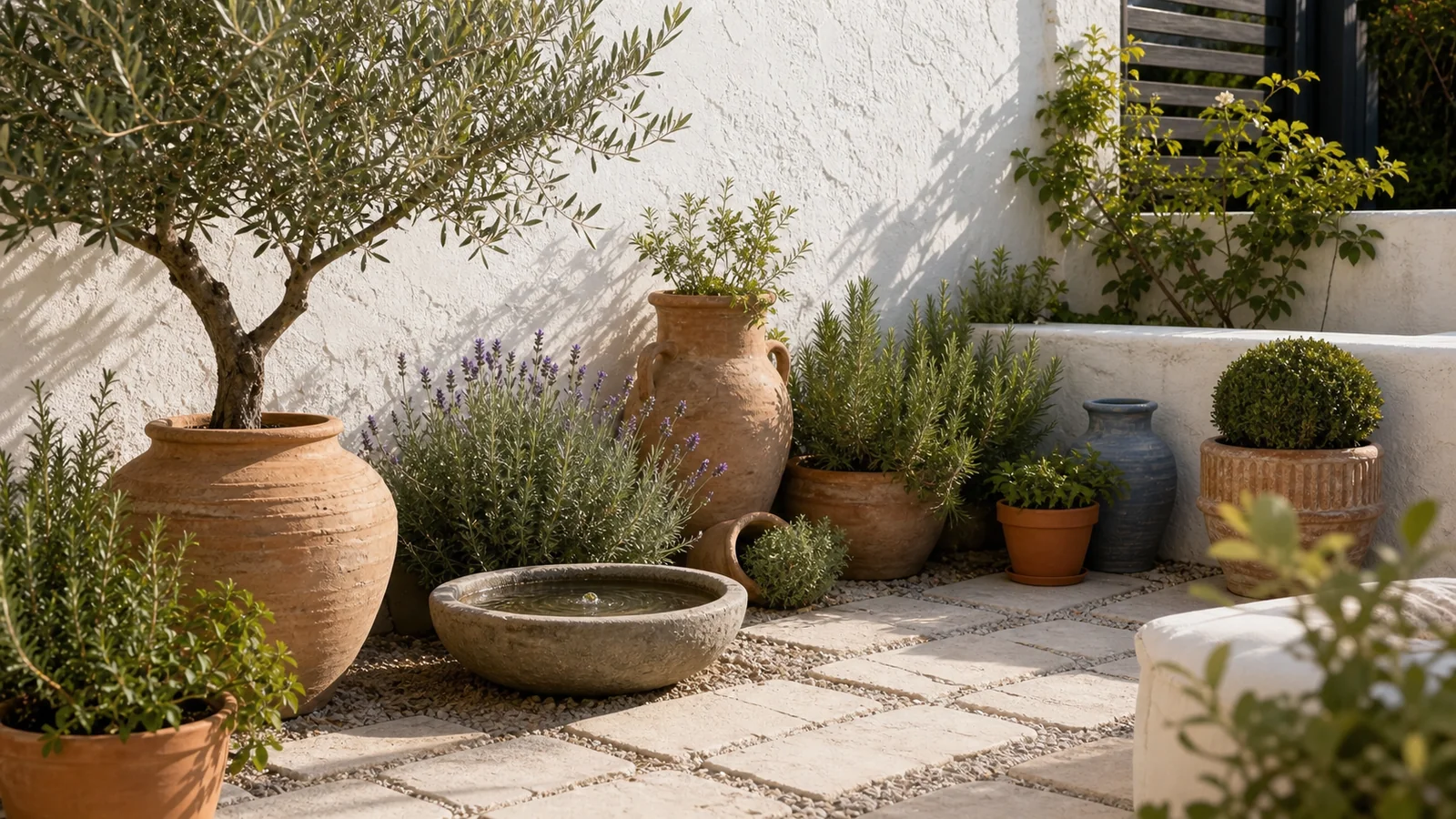
Borrow The Feeling Of Grecian Gardens, Not A Movie Set
Grecian gardens work best at home when they feel sunlit, simple, and usable. The goal is not to build a stage set with columns and statues. It is to borrow the quieter ingredients: pale stone, terracotta, silvery leaves, herbs, shade, gravel, and a sense of air around each plant.
That makes the style surprisingly practical for modern patios and small yards. A Grecian-inspired space can handle heat, look good with fewer thirsty flowers, and turn a plain outdoor corner into a calm room for coffee, reading, or dinner outside.
Start with restraint. Use a few strong materials, repeat them, and let sun and shadow do some of the decorating. The best version should feel lived in, not themed.
Start With Pale Hardscape And Gravel
The ground plane sets the mood. Grecian gardens often lean on light, heat-reflecting surfaces: limestone, pale concrete pavers, light gravel, stone chips, or warm sand-colored tile. You do not need real Mediterranean stone to get the effect. You need a surface that feels dry, bright, and simple.
If you already have a concrete patio, soften it with gravel borders, large clay pots, and a few pale stepping stones. If you are planning from scratch, choose materials that look good in full sun and are safe underfoot. Very smooth stone can become slippery when wet, while loose gravel may be awkward under dining chairs.
Use gravel carefully:
- Put it where chairs will not constantly drag through it
- Edge it cleanly so it does not spill into lawn or beds
- Choose a color that works with your house exterior
- Use landscape fabric only where it solves a weed problem without blocking needed drainage
- Rake it flat after planting work so the surface looks intentional
The hardscape should make the garden easier to maintain. Pale surfaces, clear edges, and fewer lawn interruptions all support that calm Grecian feel.
Use White, Cream, And Terracotta As The Main Palette
Color does a lot of the work in this style. Whitewashed walls, cream planters, pale stone, sun-faded wood, terracotta pots, and small blue accents can suggest a Greek garden without resorting to cliches.
If your house is brick, dark siding, or gray stucco, you can still use the palette in the garden layer. Choose terracotta containers, pale seat cushions, light gravel, and a cream outdoor umbrella. Let the house stay itself instead of forcing everything to match.
Terracotta is especially useful because it brings warmth. It also pairs well with herbs, succulents, citrus, olive, fig, bay, lavender, rosemary, thyme, and pelargoniums. Use several pot sizes rather than many tiny identical pots. A few generous containers look calmer than a crowded row of small ones.
A restrained palette does not mean the space has to be bland. Let foliage texture, shadows, clay, stone, and one or two accent colors carry the interest.
Choose Plants That Like Heat, Drainage, And Air
The planting should look relaxed but not thirsty. Grecian gardens are usually strongest when they use plants that can handle sun, leaner soil, and good drainage. The exact plant list depends on your climate, but the design roles are easy to translate.
Look for:
- Silvery foliage, such as lavender, santolina, artemisia, or lamb’s ear
- Aromatic herbs, such as rosemary, thyme, oregano, sage, and bay
- Upright structure, such as olive, cypress-like evergreens, upright juniper, or clipped bay in containers
- Soft movement, such as ornamental grasses suited to your region
- Seasonal color from pelargoniums, salvia, iris, alliums, or drought-tolerant annuals
In cold climates, use containers for tender Mediterranean plants and move them to protection when needed. In humid climates, pay extra attention to airflow. Lavender and rosemary dislike wet roots and still, damp air. Raised planters, gravel mulch, and open spacing help.
Do not overplant on day one. This style needs room between forms. A single olive or bay in a large pot can say more than a crowded collection of struggling plants.
Make Shade Part Of The Design
Grecian gardens are associated with sun, but the comfortable spaces include shade. A patio that looks beautiful and feels too hot will not be used.
Create shade with a pergola, sail shade, umbrella, vine-covered trellis, small tree, or tall container planting. The best choice depends on how permanent you want the structure to be. A renter may use a freestanding umbrella and large potted shrubs. A homeowner planning a long-term patio may choose a wood pergola or wall-mounted shade sail.
Keep the shade light and breathable. Heavy overhead covers can make a small space feel enclosed. Slatted pergolas, linen-colored fabric, and filtered tree shade suit the style better than a dark solid roof.
Think about when you actually sit outside. Morning coffee, afternoon reading, and evening dinner all need different shade angles. Stand in the space at those times before you decide where the shade belongs.
Add Water Quietly
A Grecian-inspired garden does not need a dramatic fountain. A low water bowl, small wall spout, bubbling urn, or simple basin can add coolness and sound without taking over the patio.
Place water where you can hear it from the seat you use most. Keep it easy to clean, close to power if a pump is needed, and away from constant leaf drop. In a small patio, a shallow stone-look bowl can be enough.
If water is not practical, use the idea of water instead. A blue ceramic pot, glazed tile edge, or reflective bowl planted with no-maintenance stones can add the same cool visual note without pumps or upkeep.
Avoid oversized features. The garden should still be about air, plants, stone, and daily use.
Arrange Containers Like A Small Courtyard
Containers are one of the easiest ways to build Grecian gardens in ordinary homes. They let you create the feeling of a courtyard even if you only have a slab, balcony, or side-yard landing.
Group pots in loose clusters rather than lining everything against the wall. Use one large anchor pot, one or two medium pots, and a lower bowl or herb pot. Leave enough space to walk, sweep, and water.
Good container combinations include:
| Anchor plant | Supporting plants | Best use |
|---|---|---|
| Olive in a large pot | Lavender, thyme, oregano | Sunny patio corner |
| Bay standard | Rosemary, sage, seasonal annuals | Doorway or dining area |
| Citrus in a container | Low herbs, trailing flowers | Warm sheltered spot |
| Upright juniper | Santolina, gravel mulch, small grasses | Colder-climate substitute |
Use saucers only where they are needed to protect surfaces, and empty them after watering if plants dislike wet roots. Terracotta breathes, but it also dries faster than glazed ceramic. That can be helpful in wet climates and demanding in very hot ones.
Keep Furniture Simple And Low-Key
Furniture should support the garden rather than become the theme. Choose pieces with clean lines, natural materials, and comfortable proportions. Wood, iron, woven seats, linen-colored cushions, and simple bistro sets can all work.
If the patio is small, use fewer pieces. A two-chair conversation corner with a low table may feel more Grecian than a crowded dining set. If you do dine outside, leave enough room to pull chairs back without scraping pots or tipping gravel.
Textiles can soften the stone. Use washable cushions, a natural-fiber-look outdoor rug where drainage allows, or a light throw for cooler evenings. Keep patterns restrained: stripes, small checks, or faded solids usually suit the mood better than busy tropical prints.
The space should feel ready for use. A beautiful chair that is always too hot, too far from shade, or blocked by pots is decoration, not outdoor living.
Adapt The Style To Your Climate
The classic Grecian garden look comes from a sunny, dry climate, but homeowners across Europe and North America can adapt it. The trick is to keep the design language while choosing plants and materials that survive locally.
In cold regions, use hardy substitutes for tender Mediterranean plants. Juniper, dwarf pine, catmint, hardy salvia, ornamental grasses, thyme, sedum, and hardy lavender varieties may carry the look better than struggling olives left outdoors. Keep the olive or citrus as a summer container accent if you have winter storage.
In wet regions, prioritize drainage. Raise containers on pot feet, avoid waterlogged planting pockets, and give lavender, rosemary, and sage as much sun and air as possible. In very hot dry regions, provide afternoon shade and mulch containers so roots do not bake.
The spirit of the style is not a fixed plant list. It is clarity, warmth, drought awareness, and a patio that feels connected to the garden.
A Weekend Grecian Garden Refresh
You can create a strong first pass in one weekend without rebuilding the whole yard.
On the first day, clear the patio or corner and reduce visual clutter. Choose one pale ground material or surface improvement: gravel border, light outdoor rug, cleaned pavers, or a row of stepping stones. Add one large terracotta or stone-look pot as the anchor.
On the second day, plant a simple container group. Use one structural plant, one herb, one silver foliage plant, and one seasonal accent. Add a small water bowl, blue ceramic pot, or cream cushion if the space needs a cool note. Finish by checking the view from inside the house.
Stop before the corner feels full. Grecian gardens need breathing room. You can always add another pot later, once you know where you actually sit and walk.
FAQ
What plants are best for Grecian gardens?
Olive, bay, rosemary, lavender, thyme, oregano, sage, santolina, artemisia, citrus, and drought-tolerant salvias all suit the look where climate allows. In colder areas, use hardy substitutes with silver foliage, upright structure, and good drought tolerance.
Can I create a Grecian garden on a small patio?
Yes. A small patio may be the easiest place to try the style. Use pale paving or gravel, one large terracotta pot, several herbs, a simple shade source, and restrained furniture. Keep the layout open enough to use comfortably.
Do Grecian gardens need a lot of water?
They should not. The style works best with plants that prefer sun, drainage, and moderate to low watering once established. Containers still need regular attention, especially in hot weather, but the planting should not rely on thirsty bedding plants.
How do I avoid making the garden look too themed?
Skip fake ruins, oversized statues, and too many blue-and-white accessories. Use real materials instead: stone, terracotta, herbs, white or cream surfaces, shade, and simple furniture. The result will feel more natural and less staged.
Let The Sun And Materials Do Some Of The Work
Grecian gardens are appealing because they feel clear and restful. They do not need dense planting or constant color to work. Pale stone, warm clay, silver foliage, aromatic herbs, and a little shade can turn a plain outdoor corner into a room you want to use.
Begin with the part you see every day. Edit the clutter, choose the ground surface, add one generous pot, and let the planting breathe. The garden will feel more Grecian when it is calm enough for sun, shadow, and texture to matter.
You might also like
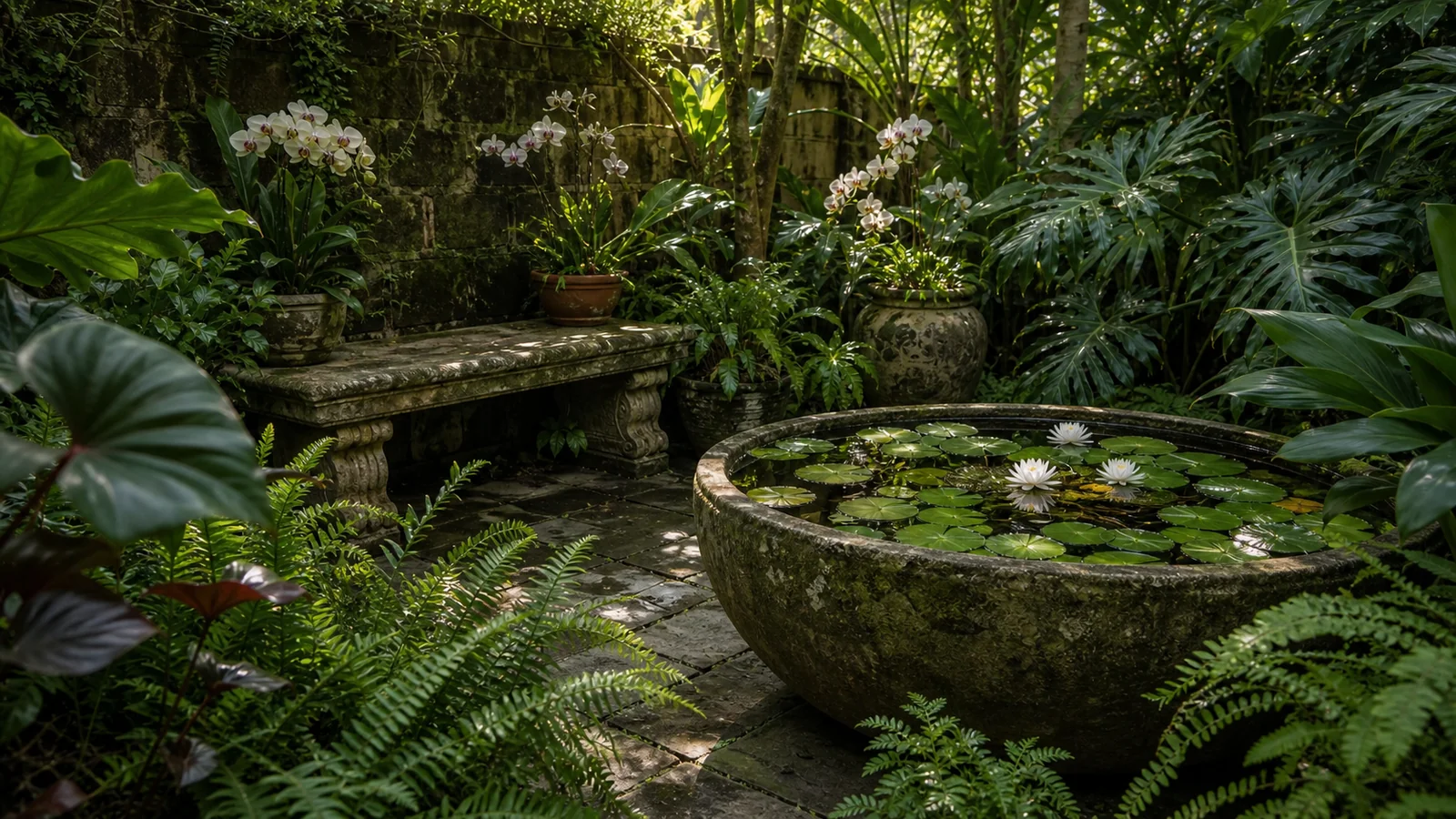
McKee Jungle Gardens Ideas for Tropical Yards
Borrow McKee Jungle Gardens ideas for shaded tropical layers, water bowls, slow paths, old-stone texture, and courtyard scale.
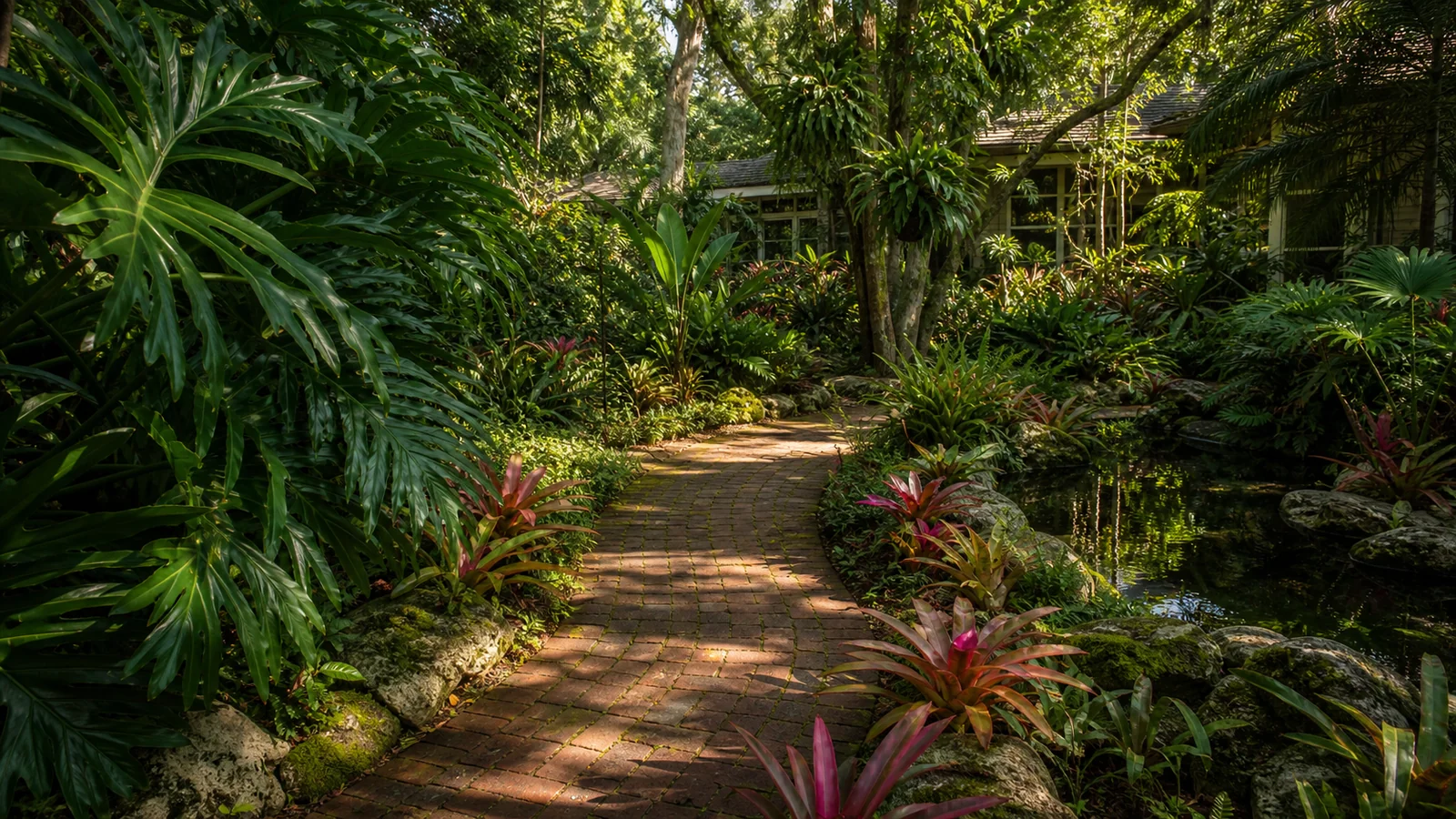
Wonder Gardens Ideas for Tropical Home Yards
Borrow Wonder Gardens ideas for banyan shade, winding paths, water, orchids, wildlife edges, and a lush but manageable yard.
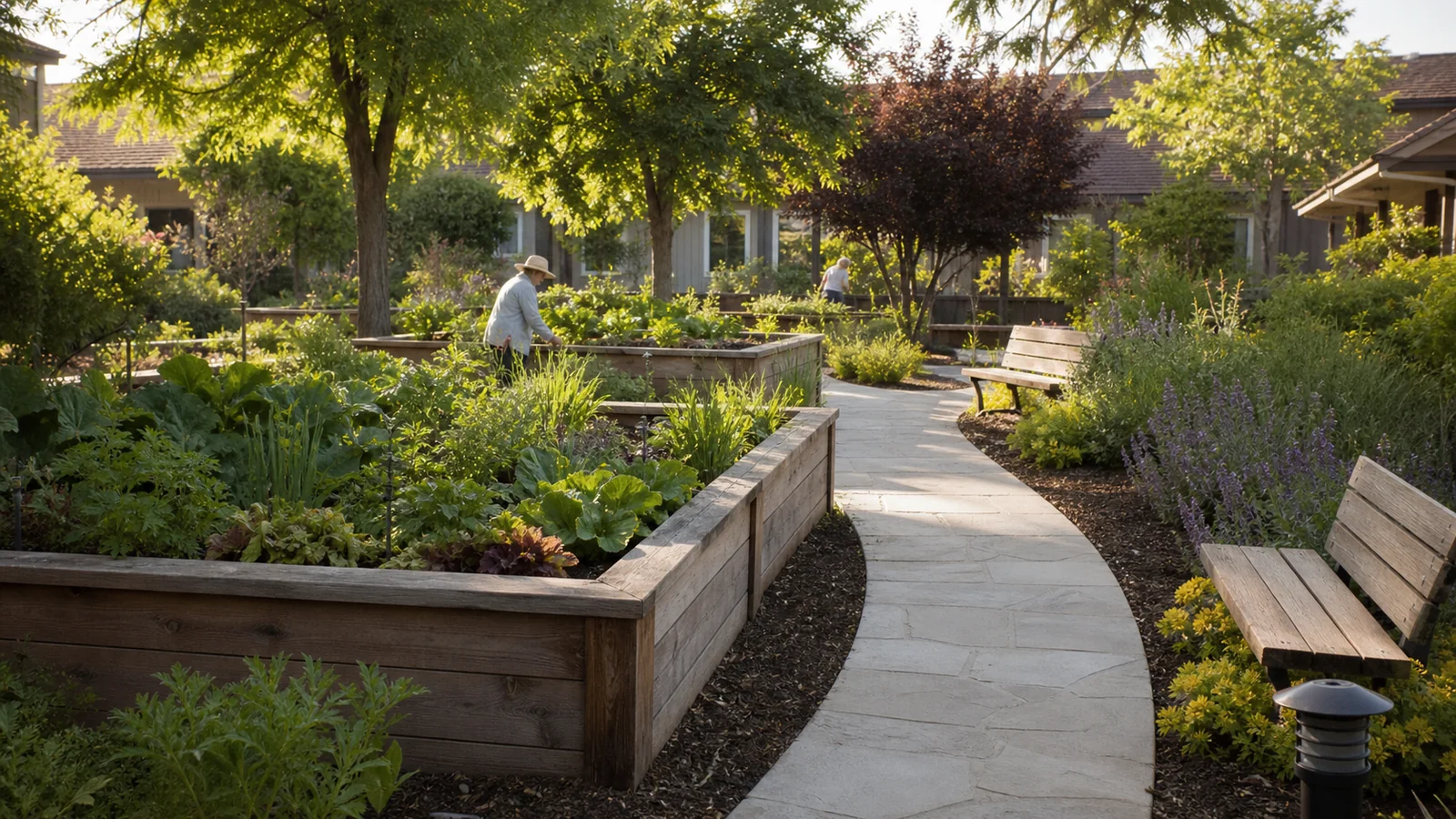
Windsor Gardens Ideas for Shared Yards
Borrow Windsor Gardens ideas for mature paths, raised beds, seating, rules, water-wise planting, and shared yard care.