Longwood Gardens Christmas Ideas for Home
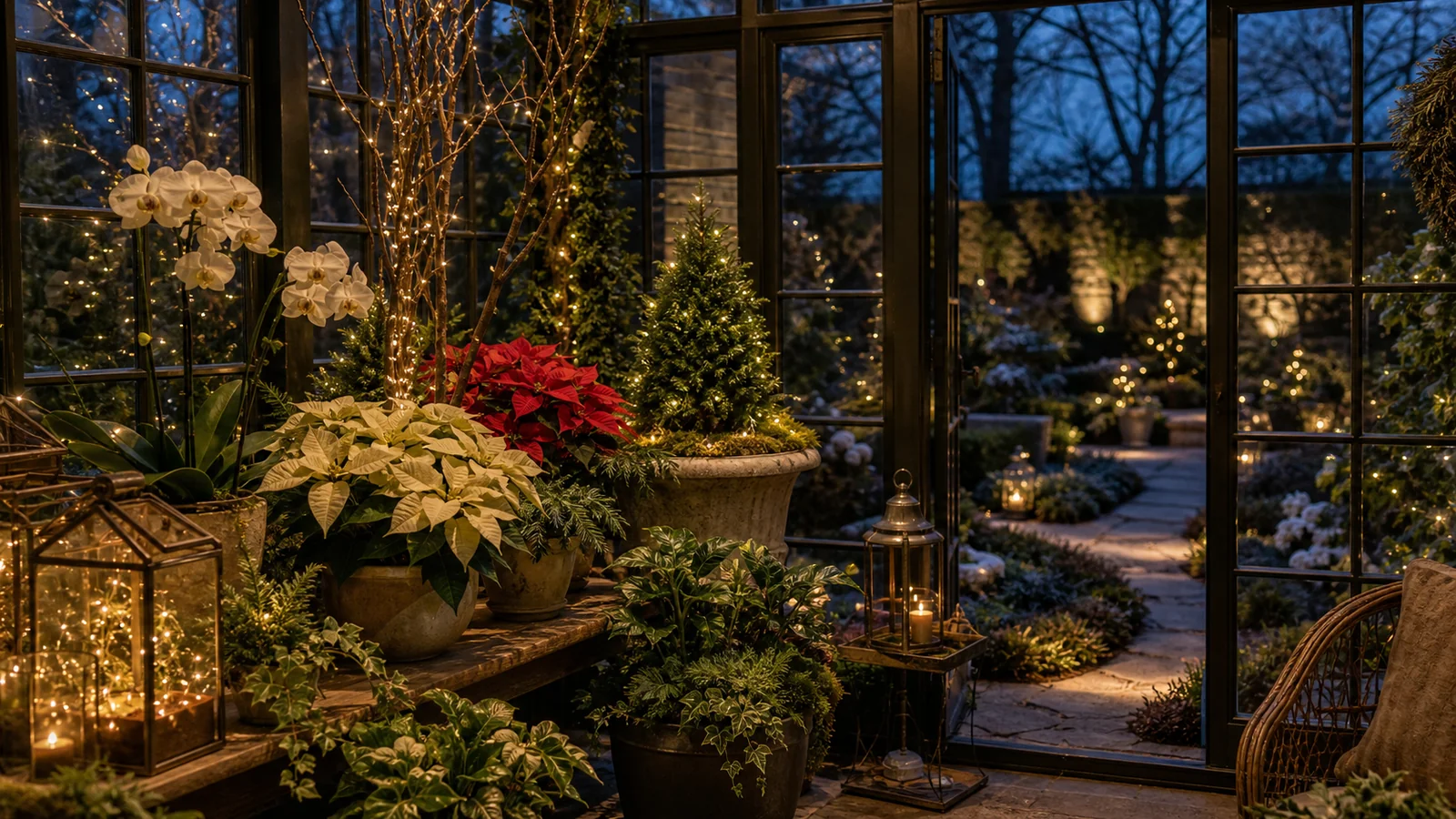
Borrow Longwood’s Plant-Led Christmas Mood
Longwood Gardens Christmas displays are known for the way plants, glasshouse rooms, outdoor lights, fountains, and winter views work together. The useful home lesson is not scale. Most patios, porches, and small gardens cannot behave like a major public garden, and they do not need to.
The better lesson is plant-led atmosphere. Instead of covering every surface with decorations, build a few layered scenes around evergreens, seasonal flowers, warm light, glass, water, paths, and winter structure.
Use Longwood Gardens Christmas as inspiration for restraint. Let plants carry the display in daylight, then let lights reveal the shape after dark.
Start With One Conservatory-Inspired Corner
Longwood’s holiday magic often feels strongest where indoor planting and winter light meet. At home, that idea can become one conservatory-inspired corner: a sunroom, covered porch, glass door landing, greenhouse bench, or protected patio edge.
Choose one place you see often from inside the house. It might be beside French doors, under a covered entry, near a kitchen window, or at the end of a short garden path. The goal is to create a small scene that works from both sides of the glass.
Build the corner with three layers:
- A structural layer, such as evergreen branches, a small potted conifer, boxwood-like clipping, or a simple trellis
- A seasonal plant layer, such as poinsettias indoors, winter containers, cyclamen in protected spots, orchids indoors, amaryllis, paperwhites, or forced bulbs
- A light layer, such as warm white string lights, small lanterns, or lights tucked behind foliage
Keep the display low enough that windows and doors still work. A holiday corner should invite use, not block the route outside.
Use Plants As The Main Decoration
The strongest botanical holiday displays feel rich because the plants are doing real work. Leaves, bracts, flowers, stems, cones, moss, and branches create texture before ornaments are added.
At home, start with living plants or fresh cut material that suits the location. Poinsettias, orchids, amaryllis, paperwhites, cyclamen, rosemary, small conifers, ivy, holly cuttings, pine, cedar, spruce, magnolia leaves, and bare twigs can all play a role, depending on climate and whether the display is indoors, protected, or fully outside.
Use this placement guide:
| Plant material | Best use | Be careful with |
|---|---|---|
| Poinsettias | Indoor or protected holiday color | Cold drafts and outdoor frost |
| Orchids | Bright indoor display near glass | Direct cold windows and overwatering |
| Paperwhites or amaryllis | Indoor bloom and scent | Top-heavy stems without support |
| Evergreen cuttings | Porch pots, window boxes, garlands | Drying near heat or open flame |
| Small conifers | Entry pots or patio structure | Frozen containers and wind exposure |
| Bare branches | Height and winter outline | Blocking doors, views, or paths |
If a plant is tender, use it indoors or in a protected spot. Do not ask a warm-room plant to survive a freezing porch just because it looks festive for one evening.
Keep The Palette Botanical
Longwood-style inspiration works best at home when the color palette feels botanical rather than crowded. Choose two or three main colors and repeat them.
A classic palette might use evergreen, cream, and deep red. A quieter one might use evergreen, white, moss, and warm brass light. A more modern porch might use deep green, burgundy, and soft gold. The important part is restraint.
When the palette is calm, plant texture becomes more visible. Glossy magnolia leaves, matte pine, lacy cedar, moss, orchid petals, paperwhite blooms, and bare twigs can all be appreciated. If every ornament is a different color, the plant detail gets lost.
Match the palette to the house as well. Brick homes often suit deep red, evergreen, and warm light. White or pale houses can carry green, cream, and soft metallic accents. Dark siding can look beautiful with white flowers, lanterns, and restrained greenery.
Let Glass And Reflection Do Some Work
Glass is part of the mood in conservatory displays. Windows, doors, mirrors, lantern panes, cloches, and greenhouse panels all multiply light. You can use that idea in a small way without building a glasshouse.
Place lights where they reflect softly in a window rather than shining directly into eyes. Put a lantern near a glass door so it reads from indoors and outside. Group indoor plants near a window that looks toward an outdoor evergreen container. If you have a small greenhouse, clean one visible pane and make the interior glow warm rather than bright.
Avoid glare. A bright bulb reflected in a dark window can feel harsh. Warm lights hidden behind leaves, inside lanterns, or along a shelf usually look softer.
The best reflective scenes have depth. Put one plant close to the glass, one just outside, and one focal point farther away. Even a narrow patio can feel layered when the view has foreground, middle distance, and background.
Make The Outdoor Path Feel Like A Winter Walk
Longwood Gardens Christmas is partly about moving through a sequence of views. At home, translate that into a short winter walk from door to patio, gate, bench, greenhouse, or front entry.
You do not need a long path. A few stepping stones, a gravel strip, or the route from the kitchen door to a container group can become the sequence. Light the route gently and give the end point a reason to exist.
Try this simple order:
| Moment | Home version | What it adds |
|---|---|---|
| Threshold | Wreath, lantern, evergreen pot | A clear beginning |
| Route | Low path lights or small stakes | Safety and movement |
| Middle view | Lit shrub, branch bundle, or planter | Depth from indoors |
| Destination | Bench, pot cluster, small tree, or greenhouse shelf | A place for the eye to land |
This overlaps with holiday lighting, but the Longwood-inspired difference is plant density and sequence. The lights reveal the planting; they are not the whole point.
Style Winter Containers Like Mini Displays
Winter containers are the easiest way to bring botanical-garden feeling to a home scale. They give structure where borders are dormant and can be refreshed without redesigning the yard.
Start with a heavy pot that suits the house. Add upright branches for height, evergreen cuttings for fullness, trailing ivy or cedar for movement, and one special detail: a cluster of cones, a few dried seed heads, a small lantern, or a restrained ribbon.
Keep the container good-looking in daylight. If it only works at night, it will feel messy whenever the lights are off. Hide cords, tuck light wires into greenery, and avoid too many shiny ornaments.
For a more greenhouse-inspired look, place a potted rosemary, small conifer, or clipped evergreen near indoor flowering plants seen through the window. The inside and outside displays will feel related without requiring the same plants to survive the same conditions.
Add Water Or Shine Carefully
Longwood often pairs lights with water, glass, and reflective surfaces. At home, use that idea carefully. Winter water features need climate awareness, electrical safety, and easy maintenance.
If you live where freezing is not a concern, a small recirculating bowl or fountain can look beautiful near evergreen containers and warm lights. In colder climates, use a dry reflective substitute instead: a glazed pot, lantern glass, metal tray, mirrored ornament used sparingly, or pale stone that catches light.
Do not run cords near water unless the equipment is rated and installed safely. Keep connections dry and follow manufacturer instructions. If the practical side feels complicated, skip water and use glass lanterns or glossy foliage instead.
The goal is a little shimmer, not a maintenance project that makes the holiday setup stressful.
Balance Indoor Blooms With Outdoor Structure
Tender holiday plants often belong indoors, while evergreens and cut branches usually handle outdoor conditions better. A strong display lets each material work where it is happiest.
Use indoor blooms near windows: orchids, amaryllis, paperwhites, Christmas cactus, poinsettias, or cyclamen where conditions suit them. Outside, use hardy containers, evergreen cuttings, bare branches, seed heads, pinecones, lanterns, and lights.
When the two sides share color, the whole view feels connected. A cream amaryllis inside can echo white lights outside. Deep red poinsettias can relate to red twigs or berries in a porch pot. Moss around an indoor orchid can connect visually to evergreen planters outdoors.
This is especially useful for homes with patio doors. The holiday scene becomes a layered view rather than a decoration shelf.
Keep The Display Manageable After The Holiday
A beautiful seasonal display should also be easy to take apart. Before you install it, think about what happens in January.
Living houseplants can move back into normal indoor care. Outdoor evergreen cuttings can be composted where appropriate. Branches and cones may be saved if dry and clean. Light strands should be labeled by location. Containers can keep their winter structure after the most holiday-specific pieces are removed.
Avoid attaching decorations in ways that damage plants, railings, doors, or trees. Do not wrap delicate shrubs so tightly that branches bend or bark is injured. Keep ornaments and wires easy to remove.
This is where restraint pays off. A plant-led display with a few clear layers is easier to refresh than a dense tangle of lights and ornaments.
Adapt The Idea For Different Homes
A front porch can use two evergreen pots, a wreath, warm lanterns, and one indoor flowering plant visible through the window. Keep the route to the door clear and dry.
A small patio can use a container cluster, cafe lights, a protected table centerpiece, and a view toward one lit shrub or small tree. If space is tight, use vertical branches rather than wide decorations.
A balcony can use railing-safe lights, one weather-appropriate evergreen container, and indoor blooms near the door. Avoid anything loose enough to blow away.
A greenhouse or sunroom can lean further into the Longwood mood. Clean the glass, group plants by height, add warm light low in the display, and keep walking space clear. Let the plant collection feel abundant but tended.
If you want a more general holiday route and patio-lighting plan, our Busch Gardens Christmas Town lighting ideas guide focuses on path safety, lighting layers, and outdoor zones.
FAQ
What is the best Longwood Gardens Christmas idea to use at home?
Use plants as the main decoration. Layer evergreens, seasonal indoor blooms, warm lights, glass reflections, and one winter path or entry view instead of trying to copy a large public display.
Can poinsettias go outside in a winter container?
Only in mild, protected conditions. Poinsettias are tender and can be damaged by cold. In most cold-winter areas, use them indoors near the view and use evergreen cuttings or hardy plants outside.
How do I make holiday garden decor look elegant?
Limit the color palette, repeat natural materials, hide cords, and let greenery carry the daytime shape. Warm white lights and fewer focal points usually look calmer than many competing decorations.
What plants create a conservatory Christmas look?
Indoors, try poinsettias, orchids, amaryllis, paperwhites, cyclamen, rosemary, ivy, and moss. Outdoors, use evergreen cuttings, small conifers, holly, bare branches, pinecones, and winter containers suited to your climate.
Let Plants Lead The Glow
Longwood Gardens Christmas inspiration works at home when it becomes smaller, slower, and more plant-focused. A porch, patio, sunroom, or garden path can feel festive without becoming crowded.
Choose one view, build it with greenery and seasonal plants, add warm light in layers, and keep the palette calm. The result is a holiday garden moment that looks good in daylight, glows after dark, and still feels like it belongs to your home.
You might also like
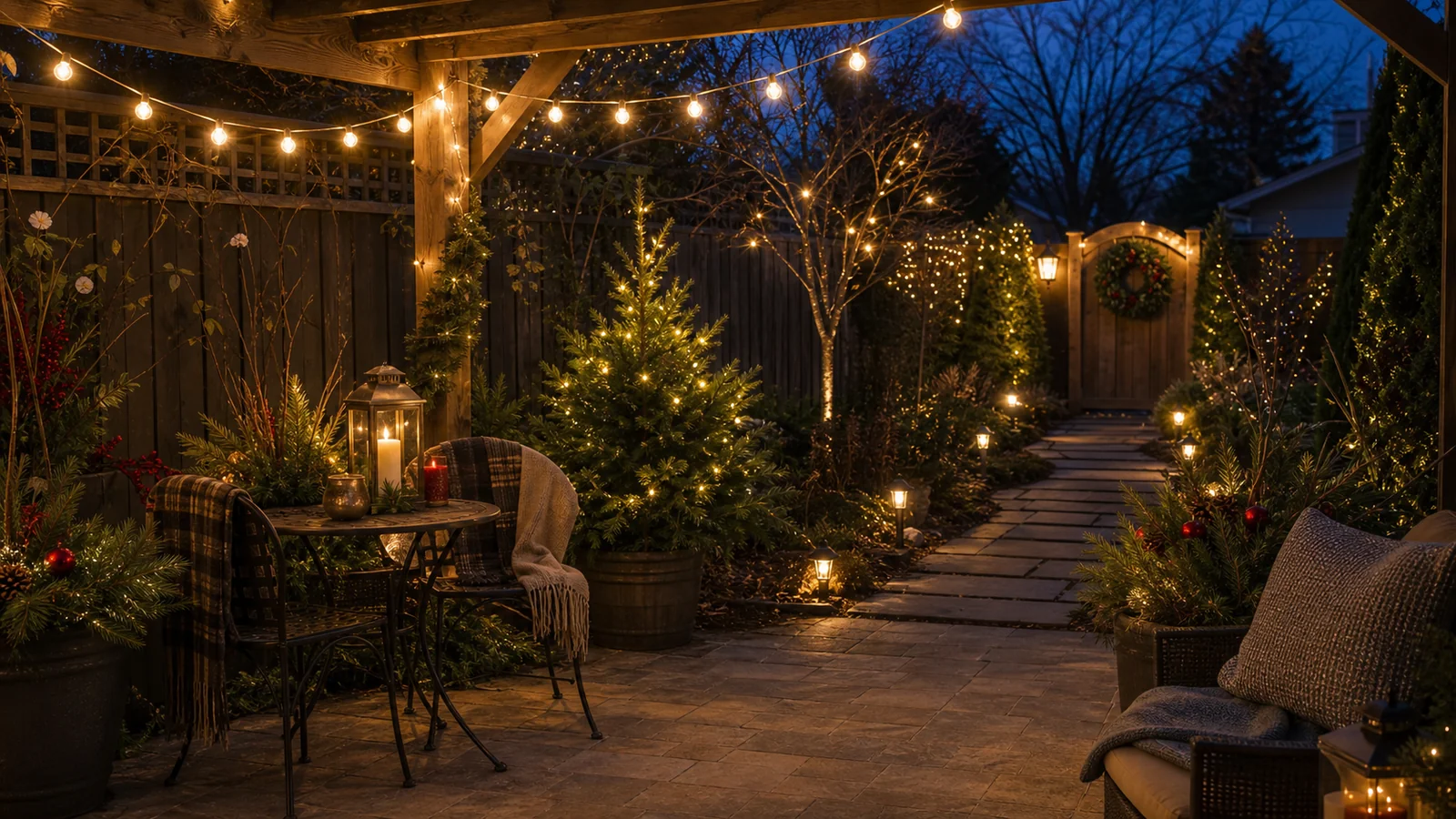
Busch Gardens Christmas Town Lighting Ideas
Turn Busch Gardens Christmas Town inspiration into warm backyard lighting, clear paths, and simple winter patio zones.
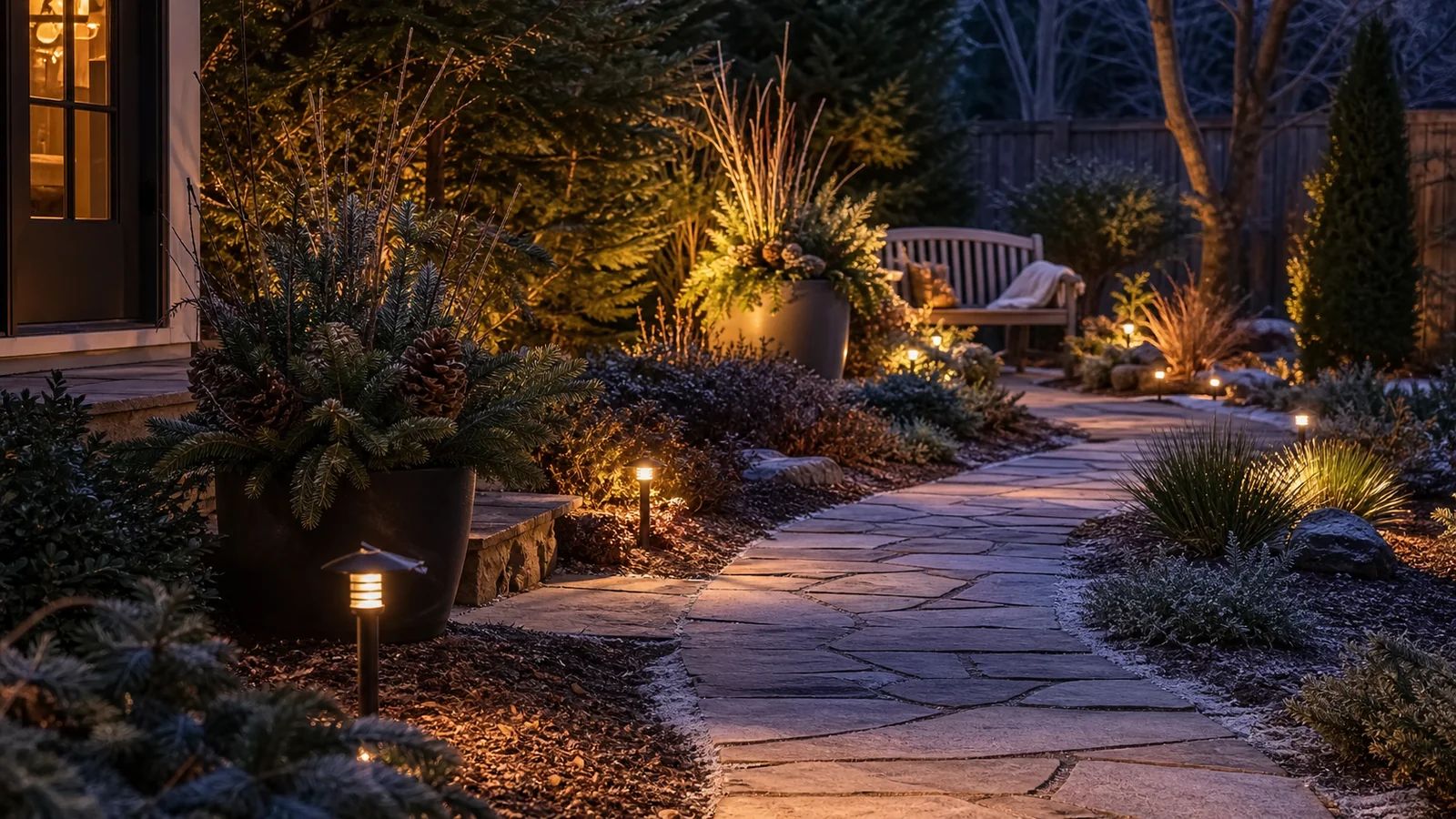
Callaway Gardens Christmas Lights Ideas
Borrow Callaway Gardens Christmas lights for safer paths, layered glow, winter containers, and one calm backyard focal point.
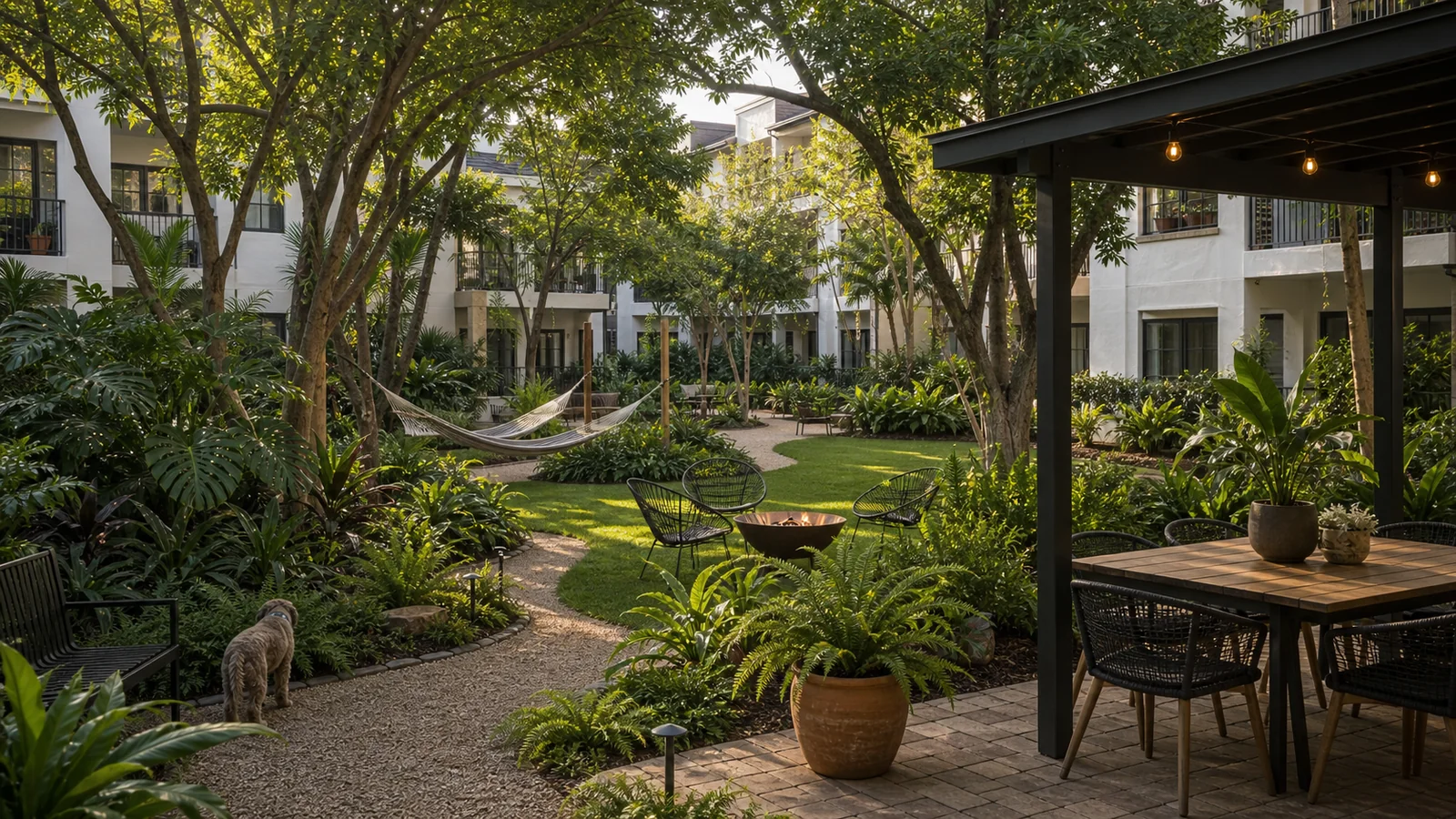
Natura Gardens Ideas for Shared Courtyards
Use Natura Gardens as a cue for shared courtyards with shade, seating, pet-friendly edges, green buffers, and easy outdoor flow.