Busch Gardens Christmas Town Lighting Ideas
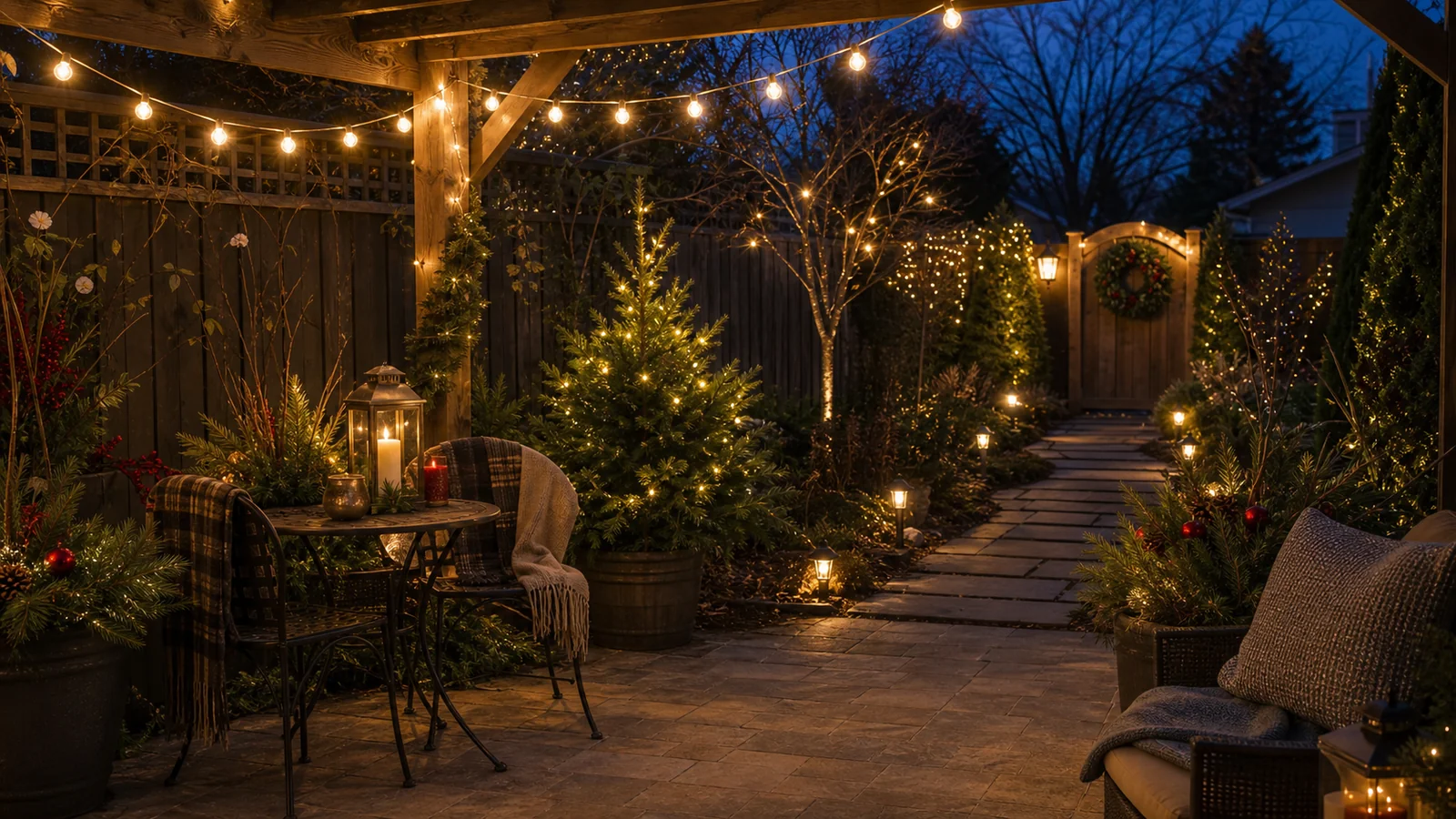
Borrow The Glow, Not The Theme Park Scale
Busch Gardens Christmas Town is built around large holiday light displays, entertainment, seasonal food, shopping, and walkable festive areas. A home garden cannot and should not copy that scale. The useful lesson is simpler: lighting works best when it guides people through a space, gives each zone a role, and creates one or two memorable views.
For a backyard, patio, porch, or garden path, that means warm lights where people gather, low lights where people walk, and a few seasonal accents where the eye naturally lands. You do not need every shrub wrapped or every surface decorated. A calmer plan often feels more polished.
Think of your outdoor space as a small evening route: door, path, seating, focal point, and return. When those pieces are lit with intention, the yard feels festive without becoming hard to install, power, or put away.
Start With The Route People Actually Use
Holiday lighting often fails when it starts with decorations instead of movement. Before hanging anything, walk the route people take from the back door to the patio, gate, garage, fire pit, or garden seating area. Notice where feet land, where steps change height, and where the path disappears in darkness.
Put safety lights first. Low path lights, step lights, lanterns, or small stake lights should make the route readable without blinding guests. Warm white is usually easier on the eye than sharp blue-white light, especially near seating.
Then add atmosphere. String lights can float over the patio, clip along a pergola, or run across a fence line. Keep them high enough that people do not brush them while walking. Avoid running cords across paths, and use outdoor-rated equipment only.
If your yard has more than one path, light the one you want people to use. A clear lit route prevents guests from wandering through wet grass, dark planting beds, or narrow side areas.
Create Three Lighting Layers
Large holiday events feel immersive because light appears at different heights. You can use the same principle at home with three simple layers.
The low layer guides movement. Use path lights, lanterns, step lights, or small lights tucked into evergreen containers. This layer should be steady and practical.
The middle layer makes the garden feel alive. Wrap a small tree trunk, light a shrub lightly from within, or place a glowing lantern on a table. This layer gives depth, especially when viewed from inside the house.
The overhead layer makes the seating area feel like a room. String lights, cafe lights, or a softly lit pergola can define the patio without adding walls. Keep this layer warm and even. Too many blinking lights can make a small space feel restless.
When the layers work together, you can use fewer total lights. The eye reads the space as complete because light appears near the ground, at planting height, and above the seating area.
Give Each Outdoor Zone One Job
Christmas Town-style spaces often shift from one scene to another. At home, that can translate into simple zones: a welcome spot, a walking route, a sitting area, and one photo-worthy focal point.
The welcome spot might be a wreath on a gate, two evergreen planters beside the door, or a lantern cluster on the porch. The walking route is the path. The sitting area needs enough light for faces, mugs, and blankets without feeling like a work light. The focal point might be a small lit tree, a container group, a bench, or a pretty view through an arbor.
Avoid giving every zone the same brightness. If everything glows equally, nothing feels special. Let the sitting area and focal point carry the warmth, while the path stays lower and calmer.
This approach also helps with storage. Four planned zones are easier to install and pack away than a collection of unrelated decorations.
Use Evergreen Containers For Instant Structure
In winter, containers do a lot of work. They bring texture, scent, and shape when borders are bare. They also make lighting easier because you can tuck small outdoor lights, branches, and ornaments into a movable display.
Use a heavy pot that will not tip in wind. Fill it with evergreen cuttings, twigs, pinecones, seed heads, or a small living evergreen if your climate and watering routine support it. Add lights sparingly. The greenery should still look good during the day.
Group containers where they solve a design problem:
- Beside a door that needs a seasonal welcome
- At the start of a path
- Near a patio corner that feels dark
- Around a bench or bistro table
- In front of a blank fence panel
Keep colors restrained. Warm white lights, evergreen branches, a little red, and one natural texture are enough for most small patios.
Make The Seating Area Comfortable For Real Winter Use
A festive patio only matters if people can stand to be there. Comfort is part of the design.
Start with dryness and wind. If the seating area sits under a pergola, porch roof, or wall, use that protection. If it is fully exposed, keep the setup shorter-term: a small table, a few lanterns, and blankets you bring out only when needed.
Use cushions and throws carefully. Outdoor fabrics handle dampness better than indoor textiles, but even outdoor cushions can stay wet in cold weather. Keep a lidded deck box, basket by the door, or indoor hook for anything soft.
Lighting should flatter the seating area without shining into eyes. Overhead string lights, lanterns on side tables, and low lights behind planters are more comfortable than a bright floodlight. If you use candles, choose stable lanterns and keep flames away from greenery, fabric, and wind.
Keep Power, Weather, And Storage In The Plan
Holiday lights are pretty, but outdoor electricity deserves respect. Use lights, extension cords, timers, and power strips rated for outdoor use. Keep connections off the ground when possible, protect them from standing water, and follow the manufacturer’s limits on how many strands can connect.
Plan the power route before decorating. If the nearest outlet is far away, reduce the design or use battery-powered outdoor lanterns for accents. Do not create a cord maze just to reach one more shrub.
Timers are useful because they keep the display consistent and reduce energy waste. They also prevent you from forgetting lights during rain, wind, or a busy evening.
Storage matters too. Label light strands by location: pergola, gate, path, containers. Wrap them loosely, remove damaged pieces, and store ornaments with the container they belong to. Next season will be calmer if the system is easy to understand.
Scale The Look For A Porch, Patio, Or Full Yard
If you have only a porch, focus on the door, rail, and one container group. Add a warm lantern or overhead strand if the porch is covered. Keep the palette simple so the small area feels intentional.
For a patio, define the seating zone first. Add overhead string lights, evergreen containers at two corners, and low lights along the route from the house. This is the most useful setup for entertaining because it supports real movement.
For a larger yard, resist the urge to light everything. Choose one path and one destination. A softly lit bench, small tree, or garden gate at the end of the route will feel more inviting than scattered lights across the whole lawn.
The best Busch Gardens Christmas Town idea to bring home is not spectacle. It is sequence. A door welcomes, a path guides, a patio glows, and one focal point gives the evening a place to settle.
FAQ
What color lights work best for a winter patio?
Warm white lights are the easiest starting point. They flatter plants, wood, stone, and faces. Add one restrained accent color if it fits your house, but avoid mixing too many temperatures in a small space.
How many lights does a small backyard need?
Fewer than most people think. Light the main path, the seating zone, and one focal point first. If those areas feel balanced, extra lights may only add clutter.
Can I use indoor string lights outside for a short time?
No. Use outdoor-rated lights and cords only. Weather, moisture, and cold conditions make indoor electrical products unsafe outdoors, even for temporary displays.
How do I keep holiday lighting from looking messy during the day?
Rely on greenery, containers, neat cord routing, and natural materials. The display should still have shape when the lights are off, especially near doors and patios you see every day.
You might also like
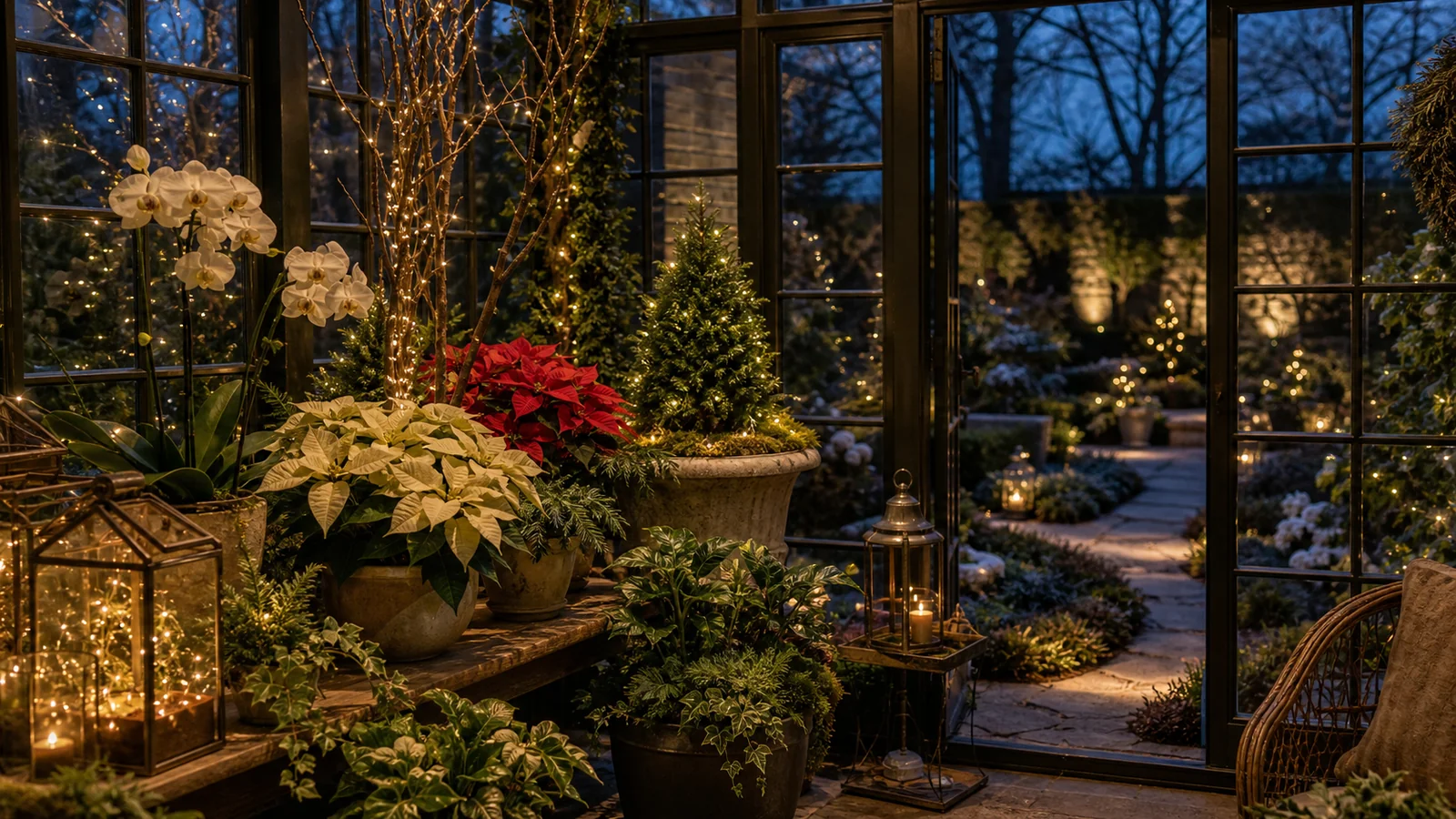
Longwood Gardens Christmas Ideas for Home
Borrow Longwood Gardens Christmas ideas for layered holiday plants, warm glasshouse glow, winter paths, and calmer decor.
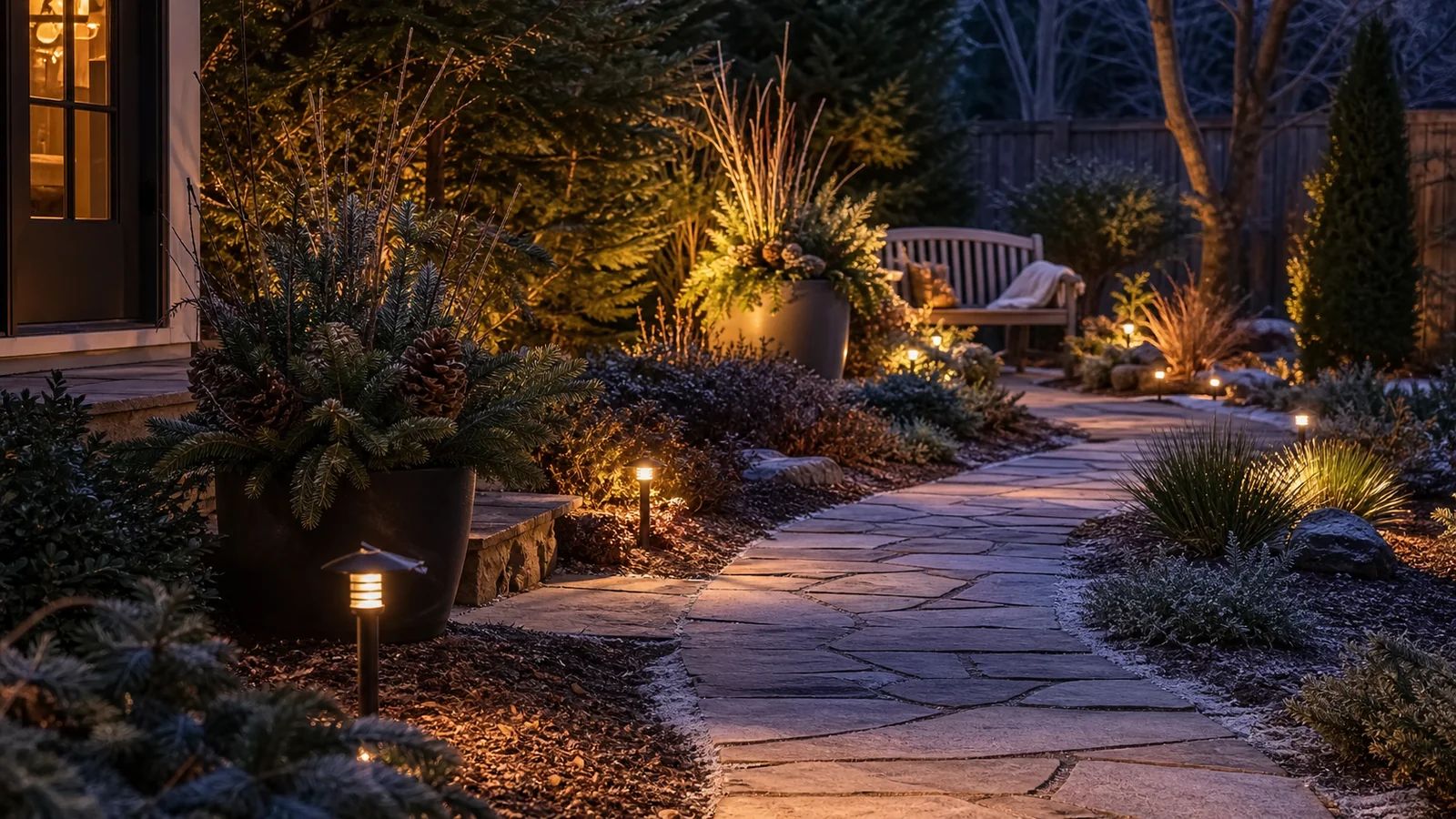
Callaway Gardens Christmas Lights Ideas
Borrow Callaway Gardens Christmas lights for safer paths, layered glow, winter containers, and one calm backyard focal point.

Natura Gardens Ideas for Shared Courtyards
Use Natura Gardens as a cue for shared courtyards with shade, seating, pet-friendly edges, green buffers, and easy outdoor flow.